
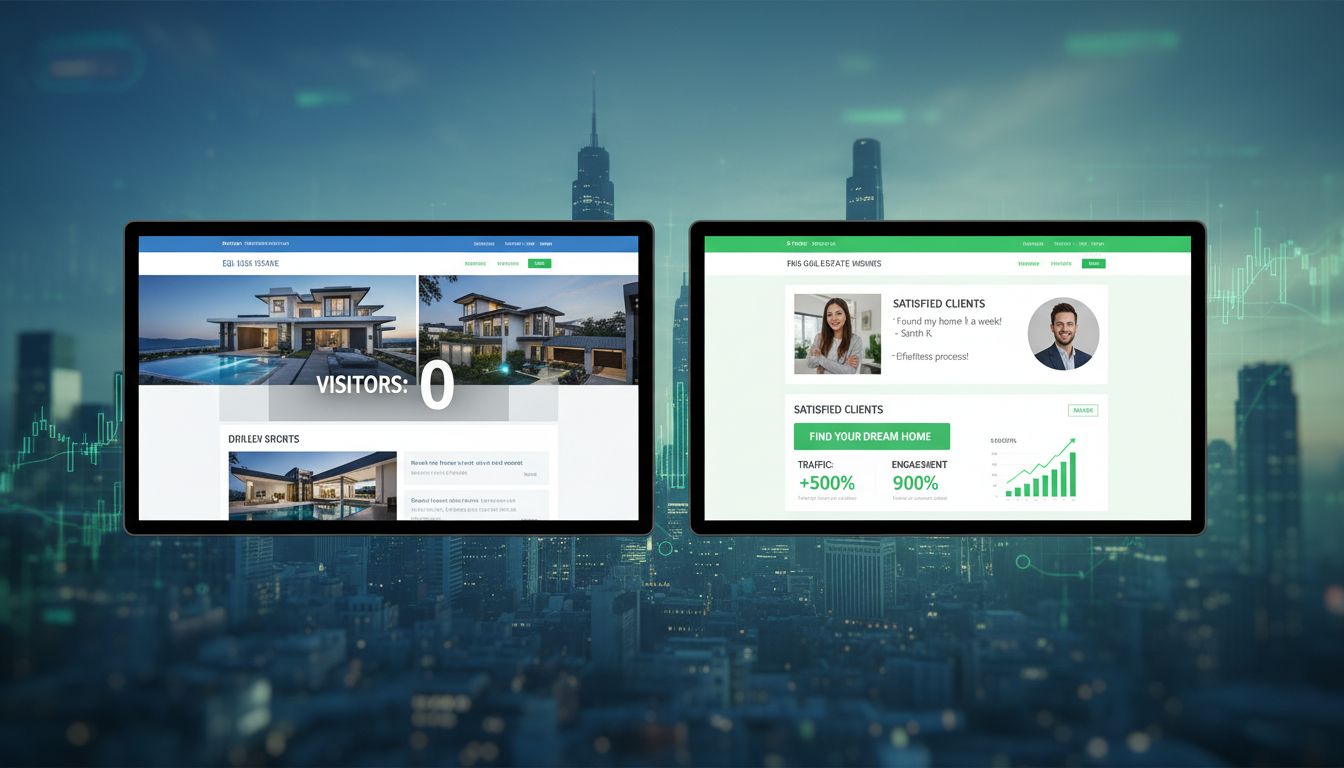
Here is something wild that caught me off guard when I first started helping agents with their online presence.
Most of them had gorgeous photos, stunning property listings, and years of experience. But their websites? Dead quiet.
No visitors, no leads, nothing.
It turns out that having a successful real estate marketing website isn’t just about looking good. It is about being found, being trusted, and turning browsers into buyers.
I have spent years working with small business owners who needed their websites to actually work for them. Real estate agents face some of the toughest competition online because 97% of home buyers start their property search on the internet.
That is a massive opportunity if your website is set up right. But it is also a massive problem if it is not.
So how do you build a real estate marketing website that effectively generates leads instead of just sitting there?
Table Of Contents:
- Why Your Real Estate Marketing Website Needs More Than Pretty Pictures
- Design Elements That Matter for Real Estate Websites
- SEO Strategy That Gets Your Website Found
- Content That Converts Visitors Into Clients
- Marketing Tools to Enhance Your Real Estate Website
- Analytics and Tracking What Matters
- Examples of Real Estate Websites That Get It Right
- Common Mistakes That Kill Website Performance
- Budget Considerations for Your Real Estate Marketing Website
- Integration with IDX and MLS Systems
- Building Authority in Your Local Market
- Conclusion
Why Your Real Estate Marketing Website Needs More Than Pretty Pictures
I get it. You have invested in professional photography and your listings look incredible.
But here is the thing about websites that I learned the hard way. They need to do more than showcase your properties.
They need to tell people why they should work with you instead of the hundreds of other estate agents in your area. They need to rank on Google so people can actually find you.
Your site must convert visitors into leads by making it dead simple for someone to reach out. This is the core of your real estate business online.
Think about how you search for things online. You type something into Google, scan the first few results, and click on whatever looks most helpful.
Your potential clients are doing the same thing when they search for homes or agents in your area. If your website is not showing up in those search results, you are invisible.
If it does show up but looks outdated or confusing, they will bounce to the next agent. A solid online presence is non-negotiable.
Design Elements That Matter for Real Estate Websites
Let me share what I have seen work time and time again with successful real estate sites.
First, mobile responsiveness is not optional anymore. More than half of your visitors are coming from phones and tablets.
If your site looks broken or requires pinching and zooming, those visitors are gone in seconds. You need customization options that allow your site to flex across devices.
Clean navigation is critical, too. People should be able to find your listings, contact info, and about page without hunting around.
I have seen agents cram so much information onto their homepage that visitors get overwhelmed and leave. Keep it simple and direct.
High-quality visuals matter, but they need to load fast. If someone has to wait more than three seconds for your page to load, most of them won’t.
That is where things like image compression and proper hosting come into play. You should be able to nail this balance between beautiful design and fast performance.
Your contact information should be visible on every single page. Phone number, email, contact form, all of it.
Make it so easy to reach you that someone could do it without thinking. Some stunning real estate sites use floating buttons for this purpose.
Creating Trust Through Your About Page
Here is something most agents miss completely. Your about page is one of the most visited pages on your entire site.
People want to know who they are working with before they pick up the phone. Make your about page personal and real.
Skip the corporate jargon and talk like a human being. Real estate professionals and estate professionals connect better when they share their story.
Share why you got into real estate, what you love about your area, and what makes you different. Include professional photos of yourself, but maybe throw in a casual one too.
Let people see the person behind the listings.
SEO Strategy That Gets Your Website Found
This is where things get interesting, and honestly, where most real estate websites completely fall apart.
Search engine optimisation is not some mysterious dark art. It is just about giving Google what it wants, so it shows your site to people searching for what you offer.
Start with location-based keywords. If you sell homes in Melbourne, your website should mention Melbourne constantly.
Do not do this in a spammy way, but naturally throughout your content. Page titles, headings, property descriptions, everywhere.
Create neighbourhood guides for the areas you serve. Write about local schools, parks, restaurants, and what makes each neighbourhood special.
This kind of content does two things. It helps you rank for local searches, and it shows potential clients that you actually know the area.
Blog posts are powerful for SEO, too. Write about the local real estate market, first-time home buying tips, or how to prepare a house for sale.
Each post is another chance for a search engine to show your website to someone who needs your help. It is a vital part of your marketing strategy.
Technical SEO Basics You Can’t Ignore
I know technical stuff can feel overwhelming, but there are a few basics that make a huge difference. For example, having an accessibility statement is becoming standard for modern sites.
Your website needs an SSL certificate. That is the little lock icon in the browser that shows your site is secure.
Google actually ranks secure sites higher than non-secure ones. Plus, people will not submit their contact info on a site that says it is not secure.
Page speed matters more than most agents realise. Use tools like Google PageSpeed Insights to see how fast your pages load and what is slowing them down.
Often, it is just images that are too large or scripts that are not optimised properly. Choosing the right website builder can solve many technical headaches upfront.
Create an XML sitemap and submit it to Google Search Console. This helps Google understand your site structure and index all your pages properly.
Content That Converts Visitors Into Clients
You have got people visiting your site now. So how do you turn those visitors into actual leads?
Your property listings need more than just specs and photos. Write compelling descriptions that help people imagine living there.
Instead of saying “three-bedroom house with a large backyard,” try something more descriptive. “Imagine your kids running through this massive backyard while you enjoy your morning coffee on the covered patio.”
Include virtual tours and video walkthroughs whenever possible. People want to see properties from every angle before they decide to visit in person.
Call-to-action buttons should be everywhere. “Schedule a viewing,” “Get a free market analysis,” “Contact me about this property.”
Make it crystal clear what you want visitors to do next. Lead gen depends on these clear pathways.
Lead Capture Forms That Actually Work
Here is a mistake I see constantly. Agents ask for way too much information upfront.
Nobody wants to fill out a form with 15 fields just to ask a simple question. Keep your initial contact forms short and sweet.
Name, email, phone number, and a message box. That is it.
You can gather more information later once you have started a conversation. You need effective capture tools that function smoothly.
Offer something valuable in exchange for contact information. A free neighbourhood guide, market report, or home valuation works great.
People are much more willing to share their email if they are getting something useful in return. These lead capture tools are essential for growing your database.
Marketing Tools to Enhance Your Real Estate Website
Your website should not exist in isolation. It needs to work together with your other marketing efforts.
Email marketing integration is huge for staying top of mind with potential clients. Capture emails through your website and send regular newsletters about new listings.
Social media feeds embedded on your site show that you are active and engaged. It also keeps your content fresh without constant website updates.
Customer testimonials and reviews build trust faster than anything else you can do. Feature them prominently on your homepage and listing pages.
A solid real estate marketing plan ties all these elements together into a cohesive strategy that actually generates results. This includes integrating communication tools directly into the dashboard.
Analytics and Tracking What Matters
You need to know what is working and what is not on your website. Install Google Analytics to track visitor behaviour.
Pay attention to which pages get the most traffic. Look at where visitors are coming from and where they are leaving your site.
Set up goals to track form submissions, phone clicks, and other important actions. This data tells you what is converting and what needs improvement.
When you generate leads, you must know where they originated. This insight allows you to double down on the marketing lead sources that pay off.
Examples of Real Estate Websites That Get It Right
Sometimes the best way to learn is by seeing what others are doing well.
Sites like The Oppenheim Group combine sleek design with easy navigation and clear calls to action. Their property listings are stunning but load quickly.

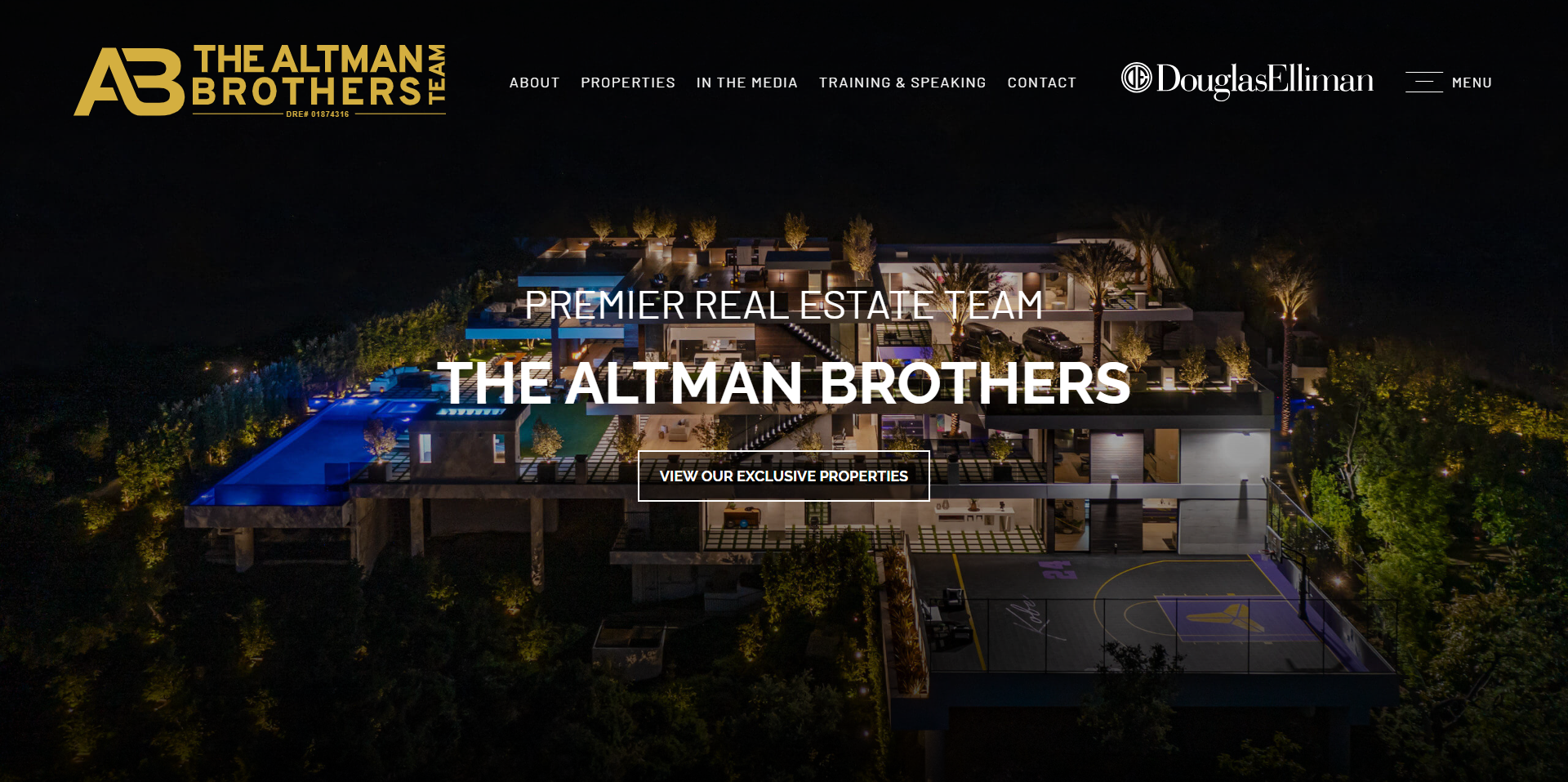
The Altman Brothers website showcases their brand personality while making it super simple to search properties. It allows visitors to get in touch effortlessly.
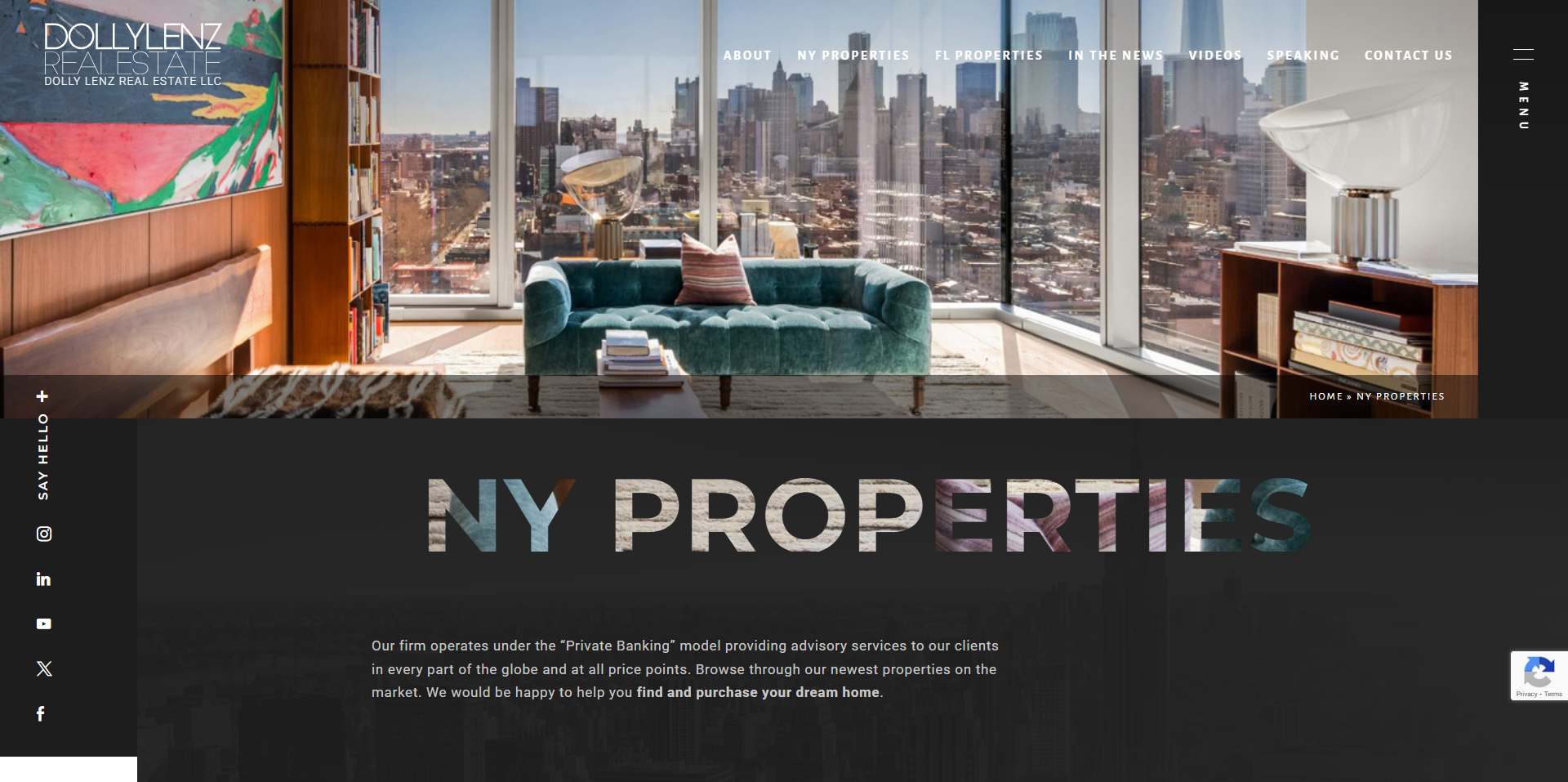
Dolly Lenz uses high-end photography and compelling copy to position herself as a luxury market expert. This approach defines luxury real estate marketing.
What these sites have in common is that they are built with the user in mind. They are not just online brochures.
They are marketing tools designed to generate leads and build relationships with potential clients. You can usually request a product demo from developers to see how these backends work.
Common Mistakes That Kill Website Performance
I have seen these mistakes sink otherwise great websites more times than I can count.
Auto-playing videos and music are the fastest way to make someone leave your site. Just do not do it.
Outdated listings make you look inactive or careless. If a property is sold, update your site immediately or mark it as sold.
Hiding your contact information is inexplicable, but it happens all the time. Put your phone number in the header of every page.
Ignoring mobile users is business suicide at this point. You must test your site on multiple devices regularly.
Forgetting about SEO means you are relying entirely on paid advertising or referrals to get traffic. Organic search should be a major source of real estate leads.
Another issue is neglecting your legal pages. You must have a clearly accessible privacy policy and a rights reserved footer to look professional.
Budget Considerations for Your Real Estate Marketing Website
Let’s talk about money because this matters to small business owners and solo agents. Costs vary wildly in this industry.
You can build a basic website yourself using platforms like WordPress or Wix for a few hundred dollars. But it will probably look basic and miss important SEO elements.
Hiring a professional designer typically costs between $3,000 and $10,000, depending on complexity.
The level of lead generation capabilities often dictates the price. The investment pays off if it brings you even one or two extra clients per year. Think of it as a marketing expense, not a cost.
Ongoing costs include hosting, domain registration, and maintenance. Budget at least a few hundred dollars per year for these essentials.
Some agents also invest in paid advertising to drive traffic while their SEO builds up. This can be effective but requires a separate budget.
To help you understand the options, here is a quick breakdown of typical website paths.
| Website Type | Estimated Cost | Pros | Cons |
|---|---|---|---|
| DIY Builders (Wix/Squarespace) | $20 – $50 / month | Cheap, fast setup | Limited SEO, generic look |
| All-in-One Platforms (Real Geeks/BoomTown) | $200 – $1,500 / month | Integrated CRM, IDX included | Recurring monthly costs are high |
| Custom WordPress Design | $3,000 – $10,000+ (upfront) | Ownership, total control, bespoke look | Requires maintenance, higher upfront fee |
| Luxury Agency (Luxury Presence) | High setup + monthly | Stunning design, elite branding | Expensive, longer launch time |
Integration with IDX and MLS Systems
If you are listing properties, you need your website connected to your MLS through an IDX feed. IDX integration is the backbone of property search.
This automatically updates your listings without manual work every time something changes. It saves you hours and keeps your site current.
Make sure your IDX provider offers mobile-responsive search tools. The search experience needs to work perfectly on phones.
Advanced search filters help buyers narrow down properties quickly. Price range, bedrooms, bathrooms, location, all the standard options.
A good IDX showcase keeps people on your site longer. If you showcase listings effectively, you reduce bounce rates.
Building Authority in Your Local Market
Your website should position you as the local expert, not just another agent with listings. You want to be the go-to real estate expert.
Create comprehensive guides about buying and selling in your area. Cover topics like closing costs, inspection processes, and local regulations.
Feature local market statistics and trends. Show that you have your finger on the pulse of what is happening in the real estate markets you serve.
Highlight your community involvement. If you sponsor local events or support local charities, talk about it.
This builds trust and shows you are invested in more than just commissions. Being seen as an estate expert builds long-term value.
Conclusion
Building an effective real estate marketing website takes effort and strategy, but it is worth every bit of investment you put into it.
Focus on clean design, strong SEO, compelling content, and making it ridiculously easy for people to contact you. Your website should work for you around the clock, generating leads while you are showing properties or sleeping.
The agents who treat their real estate marketing website as a critical business tool rather than just an online business card are the ones who dominate their local markets. They show up in search results, convert visitors into clients, and build their reputation as the expert in their area.
Start with the basics and improve over time. Sales marketing is a marathon, not a sprint.
Track what works, fix what does not, and keep adapting as technology and buyer behaviour change. By utilizing the right marketing tools and strategies, success is within reach.