

Learning how to create a website for a tourism business begins with selecting a modern platform, configuring online booking systems, and publishing search-optimised destination content. Start by choosing between WordPress or a dedicated travel agency website builder. Next, integrate payment gateways, add images of tour packages, and implement clear enquiry forms. Finally, connect web analytics tools and launch structured marketing campaigns to attract qualified travellers.
Operating a successful travel business requires an authoritative digital storefront that converts casual vacation planners into confirmed guests. Modern travelers conduct extensive research across devices before committing financial resources to flights, hotels, or regional excursions. If your digital presence lacks credibility, speed, or clear reservation options, those prospective clients will book with competing operators.
Building a high-performing travel website does not demand enterprise-level software engineering budgets. With the right foundation, any tour operator or local travel agent can establish a functional, attractive portal that systematically generates qualified reservations. This guide outlines the essential phases of planning, building, and promoting a reliable digital presence.
Selecting the correct content management framework represents the primary operational decision for your project. A standard website builder allows non-technical operators to construct basic layouts quickly using visual drag-and-drop editors. However, comprehensive tour operators often require advanced features such as live inventory synchronisation, tiered pricing rules, and multi-currency checkouts.
Platforms like WordPress paired with WooCommerce provide complete data ownership and extensive plugin ecosystems. In contrast, an agency website builder created specifically for tourism provides pre-configured inventory management right out of the box. According to research published by Statista, digital travel sales represent over 65 percent of global tourism transactions, highlighting why your software architecture must handle real-time payment transactions reliably.
| Platform Option | Ideal Business Model | Pros | Cons |
|---|---|---|---|
| Dedicated Tourism SaaS | Day tour operators, excursion guides | Built-in scheduling, payment automation | Ongoing monthly transaction fees |
| WordPress & Plugins | Full-service travel company, custom itineraries | Total design control, zero platform lock-in | Requires regular security maintenance |
| General Website Builder | Boutique travel agencies, solo consultants | Rapid deployment, minimal learning curve | Limited scalability for deep inventory |
While you can start building a website free of upfront development costs on entry-level plans, basic features rarely satisfy high-volume booking operations. As your operations expand, investing in specialised tools prevents administrative bottlenecks down the road.
- Select a software stack that supports real-time scheduling and secure payment gateways.
- Balance platform simplicity against long-term operational customization requirements.
- Avoid generic templates that lack specific reservation and catalog capabilities.
How to Create a Website for a Tourism Business: Step-by-Step Guide to Build Your Travel Agency Website
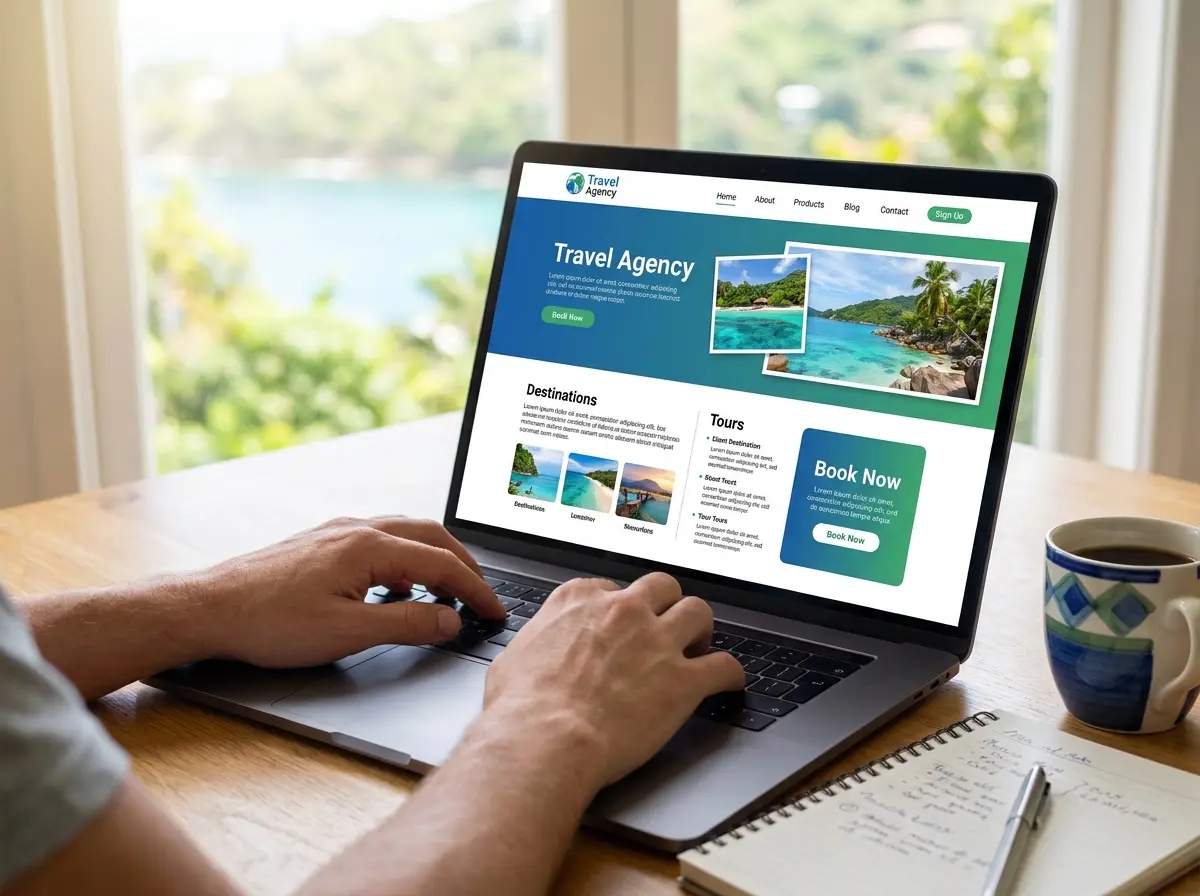
Constructing a functional travel agency website follows an orderly sequence of technical and creative milestones. Each phase establishes functional assets that support subsequent promotional activities. Rushing past basic infrastructure creates structural problems that can impair user retention later.
Every effective agent website balances aesthetic appeal with technical reliability. You must establish fast page speeds, clean mobile rendering, and frictionless reservation paths. Following a tested workflow keeps your project on schedule while preventing costly redesigns during peak seasonal cycles.
How to Create a Website for a Tourism Business: Core Setup Steps
Secure Domain and Hosting
Register a concise, memorable web address that clearly reflects your business name and regional focus. Select high-performance cloud hosting that maintains fast page loads under heavy traffic surges.
Apply Layout Templates
Deploy responsive travel templates that establish consistent branding across mobile phones, tablets, and desktop workstations. Review each layout to verify typography readability and intuitive navigation menus.
Upload Inventory and Media
Write thorough package descriptions, outline exact daily itineraries, and add images showing authentic tour experiences. Include clear pricing tiers, seasonal calendars, and upfront cancellation terms.
Integrate Analytics and Launch
Configure tracking scripts, verify payment processing through real test orders, and publish your site to global search indices.
Following this structured sequence guarantees that your agency website launches without fundamental operational errors. Once live, ongoing testing helps refine conversion points and identifies friction within reservation forms.
Essential Travel Website Booking Features and Form Architecture

Every commercial tourism website requires reliable transaction mechanisms that operate smoothly across desktop and mobile devices. Modern vacationers expect instant confirmation rather than waiting days for an email reply. Integrating dedicated booking systems allows your staff to manage seat limits, seasonal calendar changes, and automated email vouchers effortlessly.
Providing multiple booking options reduces cart abandonment during final payment screens. Customers appreciate having choices between full upfront prepayment, split deposits, or digital wallets like Apple Pay and Google Pay. A seamless experience during checkout directly drives higher checkout completion rates across all demographics.
Always minimise form fields during initial checkout. Requesting excessive passenger details before payment verification drastically reduces mobile conversion rates.
Technical form architecture also directly impacts user experience and legal accessibility compliance. When configuring tour inquiry forms, inspect the code markup to confirm every input includes a distinct label association. Missing or invalid form markup creates severe obstacles for screen-reading software used by travelers with disabilities.
Furthermore, if your reservation form contains a consent checkbox for liability waivers or newsletters, configure the checkbox label properly. A malformed checkbox label structure can prevent assistive technology from announcing form consent states accurately. Adhering to standards outlined by the World Wide Web Consortium (W3C) protects your company against accessibility liabilities while expanding your audience reach.
Travel Website Content Strategy and Search Engine Optimisation
Publishing authoritative educational content remains the most sustainable method to acquire potential customers without relying entirely on paid advertisements. A dedicated travel blog allows you to answer common logistical questions, highlight local cuisine, and share actionable travel tips. Well-crafted destination guides position your brand as an experienced regional authority long before a visitor submits a reservation inquiry.
Organic visibility requires understanding how a modern search engine evaluates user satisfaction and content relevance. When search engines scan your catalog, their algorithms assess page loading performance, structural markup, and topical thoroughness. Effective web design connects informative articles directly to bookable packages, turning research traffic into commercial inquiries.
Equipping your platform with built-in seo tools streamlines the technical optimisation of page titles, image alt attributes, and sitemaps. Using automated built-in seo features allows tour coordinators to focus on publishing compelling itinerary ideas without editing raw website code. If you implement independent seo tools, audit your site periodically to identify broken redirects or orphan landing pages that major search engines cannot index properly.
To rank higher across organic search results, structure your itinerary pages with schema markup for events, tours, and local businesses. Search platforms use this structured data to display rich snippets, such as star ratings and ticket pricing, directly within search result lists. These enhanced listings improve click-through rates against generic directory listings.
Broaden your digital reach by connecting customer touchpoints across social media channels to amplify your long-form destination content. Sharing genuine behind-the-scenes stories on social media draws travelers back to your core website. This integrated approach fuels lead generation while expanding direct referral traffic from satisfied past travelers.
Legal Compliance, Policies, and Trust Signals
Operating a reputable travel agency requires clear communication regarding legal responsibilities, cancellation terms, and guest data privacy. Consumers hesitate to transmit payment credentials to unfamiliar portals that lack verified corporate credentials. A professionally designed agency website signals stability and organizational maturity immediately.
Your portal must feature an easily accessible privacy policy that describes data collection practices under frameworks like the California Consumer Privacy Act. State regulations and international privacy laws mandate clear disclosure regarding cookie usage and third-party advertising trackers. Outlining these safeguards reassures clients that their personal and billing data remains secure.
Implementing tracking platforms like Google Analytics provides actionable behavioral metrics regarding customer journey paths and checkout drop-off rates. Analyzing Google Analytics reports reveals which tour packages attract interest and which pages require clearer calls to action. A properly maintained travel agent website helps operators systematically discover operational bottlenecks and improve seasonal revenue.
- Display verified customer reviews prominently alongside direct booking options.
- Maintain an explicit privacy policy that satisfies regional data regulations.
- Track conversion funnels continuously to identify drop-off points in the booking process.
Industry research from the U.S. Travel Association highlights that consumer confidence directly correlates with clear provider accountability. Featuring local business licenses, emergency contact lines, and industry memberships assures visitors that your operation is legitimate. Trust signals make potential guests feel confident when finalizing their upcoming travel plans.
Many independent travel agencies also offer exclusive offers via direct booking discounts to bypass middleman commissions. Presenting seasonal packages clearly on your travel agency website incentivizes users to reserve their trips directly through your portal. Over time, cultivating direct consumer relationships reduces your company’s reliance on third-party aggregation platforms.
Frequently Asked Questions
How much does it cost to build a functional travel website?
Building a travel website ranges from $500 for a self-hosted WordPress site using commercial plugins to over $10,000 for custom-engineered enterprise platforms. Ongoing costs include web hosting, domain renewals, payment processing fees, and seasonal software license updates.
Can I launch an agency website without prior coding experience?
Yes, modern visual site builders and hosted software platforms let you launch an agency website without writing computer code. Many solutions offer pre-built blocks designed specifically for tour listings, customer testimonials, and direct reservation calendars.
How does online booking software handle cancellations and refunds?
Most online booking systems automate cancellation processing according to custom business rules configured in your administration dashboard. Operators can specify refund percentages based on notice windows and credit funds back directly to original payment methods.
Why do travel websites require fast mobile loading speeds?
Most travelers research day activities and regional tours on handheld mobile devices while on vacation. If pages load slowly or elements render improperly on smartphones, frustrated visitors immediately bounce to competing operators to complete their reservations.
What content attracts the most organic traffic for travel agencies?
Comprehensive destination guides, seasonal packing checklists, and local dining recommendations attract early-stage travel planning searches. Answering specific logistical questions positions your travel agency as a trusted advisor before travelers finalize their daily itineraries.
Final Steps to Launch Your Tourism Platform
Developing a dependable travel website requires selecting capable software, designing intuitive reservation workflows, and publishing genuine destination resources. By establishing clear booking pathways and maintaining strict data security, you build lasting trust with prospective visitors. Consistent execution across every phase separates thriving regional travel agencies from dormant digital listings.
Take time to test every payment path, contact form, and mobile interface element before your high season begins. Review analytics data continually to understand how visitors browse and where they encounter reservation friction. Begin building your platform today to secure direct bookings, retain higher profit margins, and grow your company sustainably.