

Real estate professionals face fierce competition for digital visibility in today’s market, making realtor seo an essential component of any modern marketing plan. The days of relying entirely on bus bench advertisements and cold calls are completely gone. Today, prospective home buyers and sellers begin their property journey directly on search engines.
If your real estate agency fails to appear on the first page of Google, you are essentially invisible to a massive pool of potential clients. Implementing a robust realtor SEO strategy bridges the gap between your professional expertise and the clients who need it most. This comprehensive approach helps you dominate local search results and generate consistent, high-quality leads.
Search engine optimization requires a strategic combination of technical improvements, local targeting, and high-quality content creation. A well-executed campaign builds a digital asset that consistently attracts motivated buyers and sellers without relying on expensive advertising budgets. This guide breaks down exactly how to structure your online presence to maximize your visibility through real estate website optimization in local property searches.
Most property transactions begin with a simple search query on a mobile device or laptop. The National Association of Realtors reports that 97% of home buyers use the internet during their property search process. This staggering statistic highlights exactly why digital visibility remains critical for modern real estate agents.
Search engine optimization provides a sustainable alternative to expensive pay-per-click advertising campaigns. While paid advertisements stop generating organic traffic the moment your budget runs out, organic search rankings provide long-term, passive lead generation. A well-optimized real estate website continues to attract motivated buyers and sellers around the clock.
Organic search traffic also brings a much higher level of trust and credibility to your agency. Users naturally trust Google’s organic recommendations over sponsored advertisements placed at the top of the search results page. By ranking organically for local property terms, you position yourself as the definitive authority in your specific market.
The return on investment for organic optimization compounds significantly over time. As your website gains authority and ranks for more keywords, your cost per acquisition drops dramatically. This compounding effect makes organic search the most cost-effective digital marketing for real estate growth and sustainability.
- Nearly all home buyers begin their property search online using search engines.
- Organic search provides sustainable, long-term lead generation compared to paid advertising.
- Ranking highly in organic results builds immediate trust and credibility with potential clients.
Technical Foundations of a Real Estate SEO Website for Lead Generation

Search engines evaluate the technical structure of your website before they even read your content. A beautiful website design means very little if search engine crawlers cannot properly index your property listings. You must prioritize technical performance to build a solid foundation for your real estate lead generation efforts.
Mobile-first indexing dictates that Google primarily uses the mobile version of your site for ranking and indexing. With most buyers searching for homes on their smartphones while driving through neighborhoods, a flawless mobile experience is absolutely mandatory. Your website must load quickly, feature responsive design, and offer easy navigation on small screens.
Property search integrations often create massive technical hurdles for real estate websites. Many agents use Internet Data Exchange feeds that load property listings in an iframe, which search engines cannot easily read. You should implement an organic IDX integration solution that creates individual, indexable pages for every single property listing.
Site speed directly impacts both your search rankings and your overall user experience. According to Google’s Core Web Vitals guidelines, pages should ideally load in under two and a half seconds. You can improve loading times by compressing property images, utilizing browser caching, and upgrading your web hosting service.
Always use an organic IDX integration rather than a framed IDX solution. Organic IDX generates thousands of indexable property pages on your own domain, significantly boosting your overall search visibility.
Mastering Local SEO for Realtors and Real Estate Agents to Win Local Search
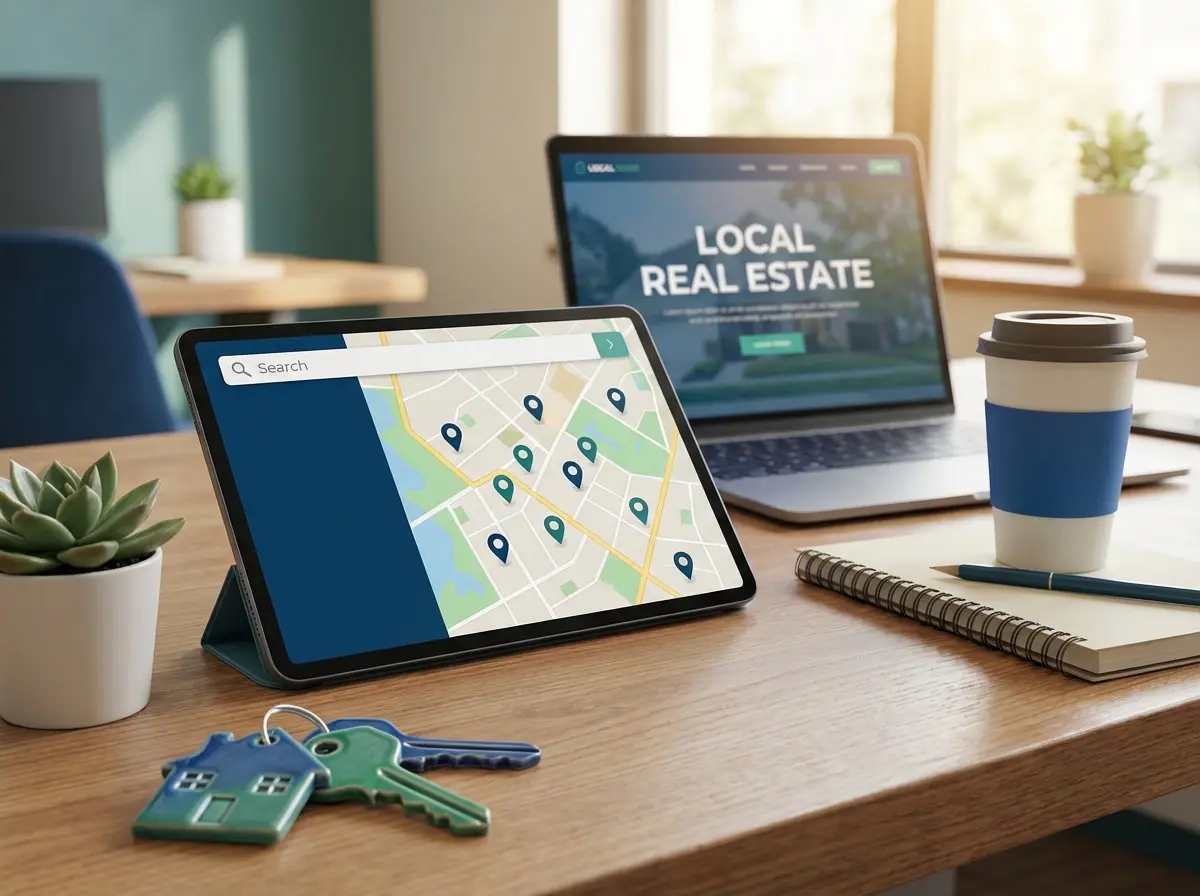
Real estate operates as an inherently local business, making local SEO for realtors your most valuable digital asset. Potential clients usually search for terms like “real estate agents near me” or “homes for sale in Austin” in google search results. To capture this highly qualified traffic, you must establish a dominant presence in local search results.
Consistent business information across the internet reinforces your local authority to search engines. Your name, address, and phone number must match exactly across all online directories, social media profiles, and your website. Search engines use these local citations to verify your legitimacy and boost your local ranking power.
Encouraging client reviews provides another massive boost to your local search visibility. Positive reviews signal trustworthiness to both search algorithms and potential clients researching your agency. You should implement an automated system to request reviews from satisfied clients immediately after closing a property transaction.
Optimizing Your Google Business Profile
Your Google Business Profile serves as the cornerstone of your entire local marketing strategy. This free listing dictates your appearance in the highly coveted Google Local Pack, the map section displayed above organic results. A fully optimized profile dramatically increases your chances of connecting with local buyers and sellers.
You must fill out every available field within your Google Business Profile to maximize its effectiveness. Adding high-quality photos of your office, your team, and recently sold properties helps establish visual credibility. Regularly posting updates about new listings or market changes keeps your profile active and engaging for potential clients.
How to Optimize Your Google Business Profile
Claim and Verify Your Listing
Navigate to Google Business Profile and claim your real estate agency. Complete the verification process using a postcard, phone call, or video verification to prove your physical location.
Select Accurate Categories
Choose “Real Estate Agency” or “Real Estate Agent” as your primary category. Add relevant secondary categories like “Real Estate Consultant” or “Commercial Real Estate Agency” if applicable.
Populate Services and Products
List all your specific services, such as buyer representation, seller representation, and property management. You can also use the Products section to highlight featured property listings.
Strategic Real Estate Keywords and Research for Competitive Property Markets
Identifying the exact phrases your potential clients type into search engines forms the basis of content creation. Many agents make the mistake of targeting highly competitive, broad terms like “real estate” or “houses for sale”. You will achieve much better results by focusing on hyper-local, specific real estate keywords.
Long-tail keywords often indicate a much higher intent to purchase or sell a property. A user searching for “three bedroom homes for sale in downtown Austin” knows exactly what they want. These specific queries typically have lower search volume but convert at a significantly higher rate than generic terms.
You must also understand the difference between buyer intent and seller intent keywords. Buyer keywords usually include words like “homes for sale,” “condos near me,” or “open houses.” Seller keywords often revolve around phrases like “home valuation,” “how to sell my house fast,” or “best listing agent.”
Organizing your keyword strategy into specific themes helps structure your website architecture effectively. You can create dedicated landing pages for different neighborhoods, property types, and client needs. This organized approach helps search engines understand your expertise and rank your pages for relevant property queries.
Never engage in keyword stuffing by unnaturally repeating city names or property terms on your pages. Search engines penalize websites that sacrifice readability to force keywords into the text.
Creating High-Converting SEO for Real Estate Agents and Content Marketing
Content marketing allows you to showcase your local expertise while simultaneously attracting organic search traffic. Standard property listings alone will not provide enough textual context for search engines to rank your website highly. You need comprehensive, informative content that answers the specific questions your potential clients ask.
Comprehensive neighborhood guides represent one of the most effective content strategies for real estate professionals. These pages should detail local schools, amenities, transportation options, and current market trends for specific communities. By providing this valuable information, you naturally incorporate local keywords while helping buyers make informed decisions.
Market reports offer another excellent opportunity to attract both buyers and sellers. Publishing monthly updates on average home prices, days on market, and inventory levels establishes your authority as an industry analyst. Search engines favor fresh, data-driven content, and clients appreciate the transparency these statistical reports provide.
Maintaining an active real estate blog helps capture users at the beginning of their property journey. You can write articles about the home buying process, staging tips for sellers, or mortgage financing options. By linking these informational posts to your core service pages, you create a powerful internal linking strategy that boosts overall site authority.
- Focus on hyper-local keywords rather than broad, national real estate terms.
- Build comprehensive neighborhood guides to establish local authority and capture long-tail search traffic.
- Publish regular market reports to attract data-driven buyers and potential sellers.
Building Authority Through Strategic Real Estate SEO Link Acquisition and Backlinks
Search engines view links from other reputable websites as votes of confidence in your real estate brand. A website with strong, relevant backlinks will almost always outrank a competitor with a similar but unlinked website. Earning these links requires a proactive strategy focused on community engagement and valuable content creation.
Local sponsorships provide one of the easiest ways to build high-quality backlinks in your specific market. Sponsoring a local youth sports team, community event, or charity often earns you a link from their official website. These local links carry significant weight because they prove your actual connection to the geographic area.
Digital public relations can help you secure powerful links from major news outlets and industry publications. By sharing your expert commentary on local housing trends with journalists, you can earn mentions in prominent articles. Platforms like Connectively connect real estate experts with reporters looking for reliable industry sources.
Creating highly shareable content naturally attracts backlinks without manual outreach efforts. Original research, comprehensive market data, or visually appealing infographics about local real estate trends often get referenced by other websites. When local businesses or bloggers use your data, they typically provide a link back to your original post.
Tracking Analytics and Measuring Realtor SEO ROI and Performance
You cannot improve what you do not measure, making analytics crucial for any realtor SEO campaign. Installing Google Analytics 4 allows you to track exactly how users interact with your property listings and content. This data reveals which marketing efforts generate the most qualified traffic and the highest conversion rates.
Google Search Console provides invaluable insights directly from the search engine itself. This free tool shows you exactly which keywords drive traffic, your average ranking positions, and any technical errors on your site. You should regularly monitor these reports to identify new opportunities and fix indexing issues promptly.
Tracking conversions matters far more than simply monitoring overall website traffic numbers. You need to know exactly how many organic visitors submit contact forms, call your office, or sign up for property alerts. Setting up proper conversion tracking helps you calculate the true return on investment of your optimization efforts.
Heat mapping software can show you exactly how potential clients navigate your property pages. These tools record where users click, how far they scroll, and which property images attract the most attention. Analyzing this user behavior helps you optimize your page layouts to generate more leads from your existing traffic.
SEO is a long-term strategy, and it typically takes three to six months to see significant movement in search rankings. Consistently monitoring your analytics helps you verify that your metrics are trending in the right direction.
Common Real Estate SEO Optimization Mistakes and Technical Pitfalls to Avoid
Many agents sabotage their own search rankings by making easily avoidable technical and strategic errors. One major mistake involves deleting sold property pages instead of redirecting them properly. When you delete a page that has earned backlinks, you permanently lose all the authority associated with that specific URL.
Ignoring the importance of image optimization frequently damages real estate website performance. Agents often upload massive, high-resolution property photos directly from their cameras, severely slowing down page load times. You must resize and compress all images while adding descriptive alternative text that includes relevant local keywords.
Writing thin, duplicate content for property descriptions represents another significant missed opportunity. Copying the exact same listing description from your Multiple Listing Service guarantees your page will not rank independently. You should write custom descriptions that highlight specific features and incorporate natural keyword variations for your most important listings.
Failing to update existing content regularly signals to search engines that your website might be inactive. Real estate markets change rapidly, and your online resources must reflect the most current conditions. You should schedule quarterly reviews of your neighborhood guides and market reports to keep the information fresh and accurate.
The Future of Property Search Optimization and Realtor SEO Trends
The digital marketing environment constantly shifts as search engines introduce new algorithms and features. Artificial intelligence now plays a massive role in how search engines understand user intent and deliver results. Real estate professionals must adapt their strategies to accommodate these technological advancements and shifting consumer behaviors.
Voice search continues to grow in popularity, changing how people look for properties online. Users speak to their digital assistants differently than they type, often using conversational, question-based queries. Optimizing your content to directly answer common real estate questions helps capture this growing segment of mobile search traffic.
Video content increasingly dominates search engine results pages for real estate queries. Google frequently displays YouTube videos prominently when users search for neighborhood tours or property walkthroughs. Integrating optimized video content into your website provides another powerful channel for attracting and engaging potential home buyers.
Hyper-personalization will likely dictate the next major shift in property search algorithms. Search engines increasingly deliver results based on a user’s specific location, past search history, and personal preferences. Creating highly targeted, specific content guarantees your agency remains visible as search results become more personalized.
Conclusion
Mastering realtor SEO requires consistent effort, technical precision, and a deep understanding of your local market. By implementing the strategies outlined in this guide, you build a digital asset that generates leads long after traditional advertising campaigns end. Focus on providing genuine value to your target audience through comprehensive content and seamless technical performance.
The real estate industry will only become more digitally competitive in the coming years. Establishing strong search engine rankings today protects your market share and positions your agency for sustainable, long-term growth. Start by optimizing your Google Business Profile, fixing technical errors, and creating content that truly serves your local community.
Do not wait for your competitors to establish dominance in your local search market. Evaluate your current website performance, identify your highest-value keyword targets, and begin executing a structured optimization plan. With patience and execution, organic search will transform how you acquire new real estate clients.