

You need a website yesterday. Your coaching business is growing, referrals are coming in, but when people ask for your website to learn more, you’re still sending them to your LinkedIn profile or a half-finished placeholder page.
You know you need something professional online, but the thought of custom web design — the timeline, the cost, the endless revisions — feels overwhelming when you’d rather be coaching clients.
Here’s where coaching website templates become your secret weapon. The right template gives you a professional, conversion-optimized website in days instead of months, at a fraction of custom design costs.
But here’s the catch: most coaches choose templates based on aesthetics alone, then wonder why their beautiful site isn’t booking discovery calls. A pretty template that doesn’t convert is just an expensive digital brochure.
The best coaching website templates do more than look good. They’re strategically designed to guide visitors from “just browsing” to “ready to book.”
In this guide, we’ll show you how to choose templates that actually convert, the essential features every coaching website needs regardless of template, and how to customize pre-built designs so they reflect your unique brand while maintaining proven conversion elements.
Table Of Contents:
- What a High-Converting Coaching Website Needs to Do
- Types of Coaching Website Templates and Who They Suit
- Picking a Platform for Your Coaching Website Templates
- Must-Have Pages for a Coaching Website Built on Templates
- How to Choose The Right Coaching Website Template
- Design, Graphics, and Content: How to Make a Template Yours
- Important Features for Specific Coaching Niches
- Simple Implementation Plan for Launching Your Coaching Site Fast
- Conclusion
What a High-Converting Coaching Website Needs to Do
A pretty site that does not convert is just an expensive digital brochure.
To keep things simple, here is what a strong coaching website must achieve:
- Show people who you are and who you help, within the first few seconds.
- Make it easy to book a call or buy a package using a simple link.
- Show real proof that your coaching works, like testimonials and case snippets.
- Capture leads from visitors who are not ready to buy yet.
- Look clean on mobile, because so much traffic is on phones now.
- Guide visitors seamlessly from their initial problem to your solution.
If your current site does not tick those boxes, coaching website templates built by specialists can fix that gap very fast.
Types of Coaching Website Templates and Who They Suit
Not all templates are created equal, and not every coach has the same business model.
The template designed for a business strategist will feel wrong for a breathwork guide or therapist.
So it helps to start by matching template type with how you work and sell.
| Template Type | Best For | Key Strength |
|---|---|---|
| 1 on 1 Coaching Template | Career, life, executive, health coaches | Strong booking and simple services pages |
| Therapist or Wellness Template | Counsellors, therapists, wellness coaches | Gentle visuals and room for policies and FAQs |
| Group Program Template | Coaches running cohorts or memberships | Sales pages and program breakdowns |
| Consulting Style Template | Business and strategy coaches | Case studies, authority, and team sections |
| Personal Brand Template | Multi-hyphen coaches, speakers, creators | Content-heavy and media-friendly |
Example: a Coaching Friendly Template Built for Depth
If you are in the wellness, therapy, or mental health coaching space, you probably want something softer and more calming.
An example of a template in that space is The Muse, which is a 10-page Squarespace design aimed at therapists and wellness providers.
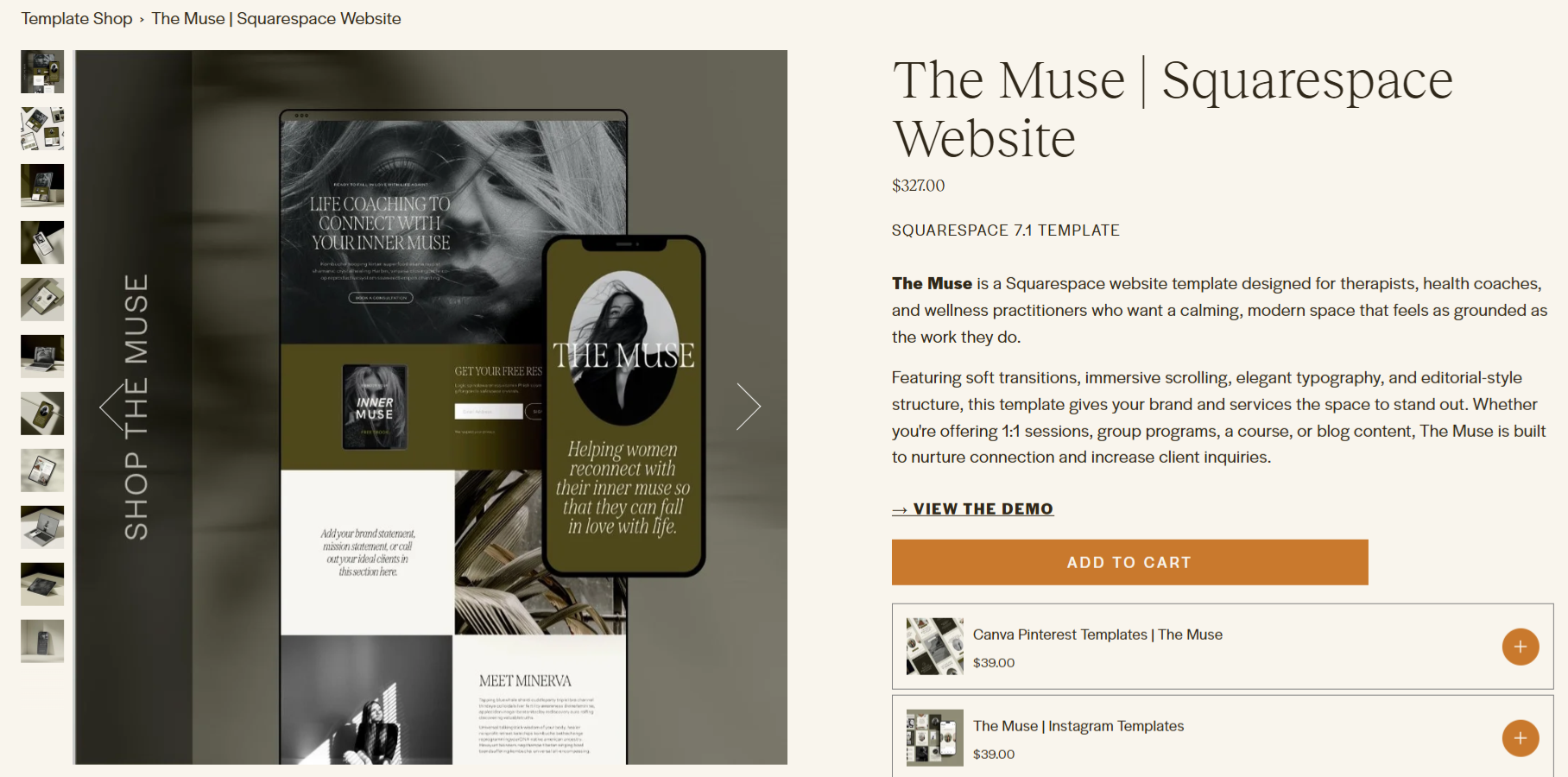
It is built to support one-to-one sessions and group offers, so it already expects that mix in your business.
What I like about that kind of template is how much structure it gives you out of the box.
You are not guessing where to talk about your background, how to present offers, or where to place that gentle nudge to book a consult.
A calm, minimalist look like this design is also forgiving if you are not a confident designer.
There is less clutter, more focus on clear words, and it feels safer for heavy topics, which matters if you work with people at tender points in their lives.
This style of modern website template often features soft transitions and elegant typography to keep the user engaged.
Picking a Platform for Your Coaching Website Templates
Before you fall in love with a layout, you need to decide which platform makes sense for you.
You can absolutely move later, but it is nicer not to rip everything up again in six months.
Here is a quick snapshot of popular options through a coach lens.
| Platform | Good For | Upside | Watch Out For |
|---|---|---|---|
| Squarespace | Solo coaches, wellness practitioners | Clean templates, simple editor | Less flexible for advanced funnels |
| WordPress + Astra | Growing coaching brands | Huge control and plugins | More moving parts to manage |
| Hosted Course Platforms | Coaches with programs first | Courses, email and site together | Site designs can feel restricted |
A theme library is handy if you choose WordPress, because you get demos you can import in a few clicks.
From there, it is mostly swapping in your own text and photos rather than starting on a blank page.
However, many life coaches prefer a Squarespace website because the interface is intuitive and requires less maintenance.
A Squarespace template typically allows you to build a professional website without needing to touch a line of code.
Must-Have Pages for a Coaching Website Built on Templates
Templates should give you the pages you need, but they can only go so far.
You still have to bring the content and your story.
Here are the core pages every coaching site needs, no matter what the template calls them.
A Friendly Home Page
Your home page should greet the right people and gently send the wrong people away.
The first section needs to say who you help, what you help with, and what happens next.
Think something as plain as “I help new coaches build a booking-friendly site in a week, book a free website checkup call”.
Your home page also benefits from visual support.
Well-placed graphics, icons, and imagery have been shown to make your content easier to scan and more memorable, especially on a coaching website.
An Engaging About Page
Your About page is often the second most-visited page after Home.
This is where people go to decide if they like you enough to trust you with their mess, dreams, or team.
You want clear photos, a human story, and simple proof, not a stiff resume.
If you like studying strong brand storytelling, look at how Canva uses its About, Newsroom, Events, and even case studies to create a sense of personality and values.
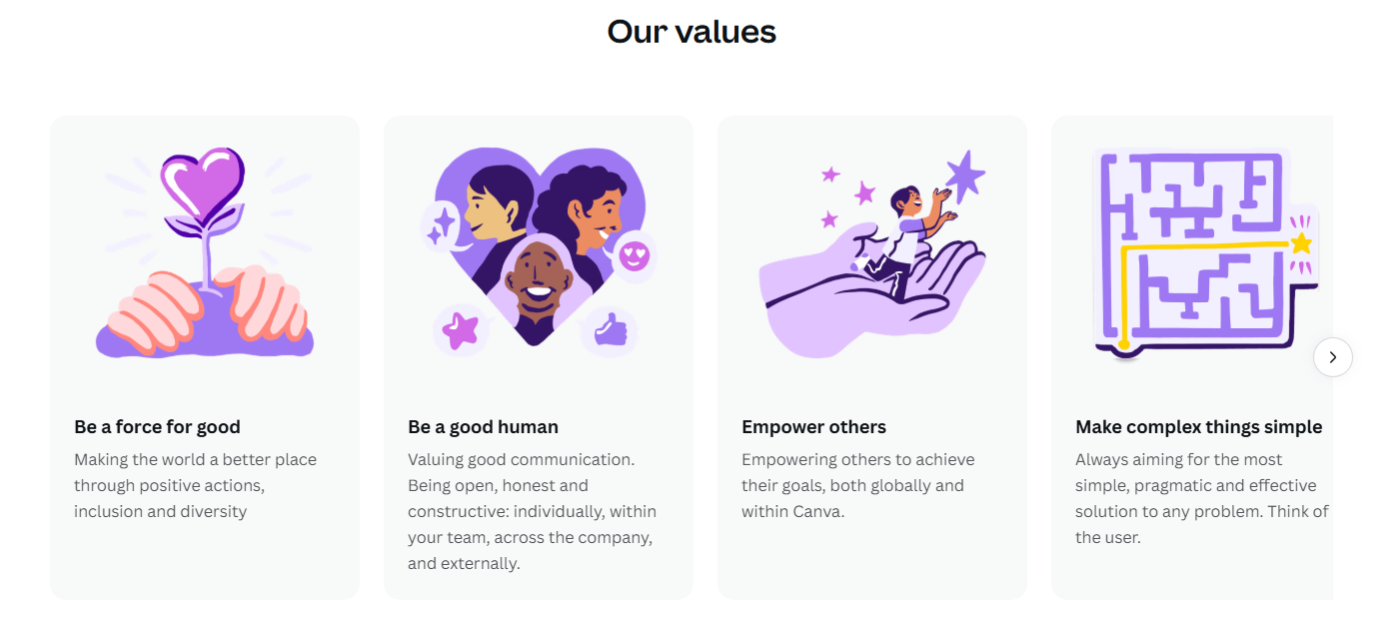
Those are all linked through their About Canva navigation cluster, along with social impact and sustainability pages.
You do not need all of that, but you can borrow the idea of painting a fuller picture of your brand, not just your qualifications.
Include links to your social profiles, such as your IG links, to show the human side of your business.
Services or Work With Me Page That Removes Guesswork
People want to know what you do, how long it takes, and roughly what it costs.
Strong coaching website templates will give you sections for different offers like one-to-one sessions, group programs, and VIP days.
Make sure each offer has three things front and centre: who it is for, what result they can expect, and what the next step is.
Whether you offer a single service or multi-service packages, clarity is vital.
For business services, outlines must be crisp and outcome-focused to attract serious business owners.
Sales Page or Program Page for Signature Offers
If you sell one main program, you may want a deeper page focused on that offer.
Some templates bundle in ready-made program layouts with sections for modules, inclusions, FAQ, and payment options.
This saves you from wrestling with formatting just to show people what they get.
A template perfect for high-ticket offers will have distinct sections for testimonials and module breakdowns.
Contact and Booking Flows That Feel Easy
Do not bury your booking links in your footer.
A clean template will have buttons in the header and key page sections linking to your call booking or contact form.
Check this on mobile, where things often fall apart because buttons shrink or disappear.
With a modern website template, these buttons are usually sticky or easily accessible on all devices.
How to Choose The Right Coaching Website Template
Picking a template can feel a bit like choosing tiles for a kitchen: your eyes start to glaze over after a while.
So here is a practical checklist that cuts through the noise.
-
Decide on your main goal for the next twelve months.
-
Check if the template layout supports that goal out of the box.
-
Scan the demo on mobile before you look at the desktop.
-
See if there is room for your content, not just pretty stock photos.
-
Look at how testimonials, case studies, and social proof are handled.
-
Notice how your eye is guided toward calls to action.
Remember, a fully customizable template allows you to adjust the colour palette to match your branding later.
Design, Graphics, and Content: How to Make a Template Yours
A coaching website template is a starting line, not a final destination.
You still have to breathe life into it so it feels like you and your practice.
Three levers make the biggest difference with the least pain.
1. Words That Sound Like Human, Not Corporate Copy
Start with the words in buttons and headings, because those carry a lot of weight.
Change “Submit” to something warmer like “Send the message” or “Book my free call”.
Use plain language and speak to one person at a time, not “clients” as a vague group.
Great copy builds trust faster than any fancy animation ever could.
2. Graphics That Support The Journey
Good visuals do more than look pretty; they guide people through the story your page is telling.
That might be an icon beside each step in your process, or a diagram of your signature framework.
Consistent use of these elements creates a polished website look that clients respect.
3. Proof Sprinkled Through The Site, Not Stacked pn One Page
Most templates come with a dedicated testimonials page, but do not stop there.
Pull one or two of your best lines into your homepage, About page, and even next to pricing.
It is less about shouting and more about giving gentle reassurance at the points where people get nervous.
Important Features for Specific Coaching Niches
Different coaching styles require different technical features, so your template ideal needs to reflect that.
A business coaching site often needs more rigid structures for case studies and white papers.
In contrast, an online health coach needs visual proof, galleries, and perhaps an immersive scrolling experience to engage visitors.
For Life Coaches and Wellness Pros
If you are a life coach, your website needs to connect on an emotional level immediately.
Look for Squarespace templates that offer soft colour palettes and plenty of whitespace.
You want a template built to showcase your philosophy and personal story clearly.
Avoid corporate-looking grids; instead, opt for layouts that create a sense of flow and openness.
A website template designed for this niche often includes specific blocks for podcast episodes or blog post highlights.
For Business and Executive Coaches
Business owners looking for a coach are often pressed for time and results-oriented.
A coach website in this sector must look authoritative and professionally designed.
Your site builder choice should allow for integrations with CRM tools and scheduling software.
The coach template you choose should prioritise clear value propositions and strong calls to action.
You might also want space to highlight professional services or corporate workshops you offer.
Simple Implementation Plan for Launching Your Coaching Site Fast
If your current site is non-existent or half-built, it helps to follow a simple plan so you do not stall again.
Here is a 5-day structure you can adapt to your own schedule.
Day 1: Pick your platform and template. Do not overthink this step.
Day 2: Draft core copy for your Home, About, and Services pages in a document.
Day 3: Collect three to five testimonials and a handful of clear photos.
Day 4: Plug everything into the template, staying close to the existing layout.
Day 5: Test the mobile version, booking forms, and contact flows with a friend.
Remember that the first version of your site is allowed to be simple.
Templates give you a low-risk way to launch now, get some clients through it, then adjust based on real feedback rather than guesses.
Once you build site confidence, you can simply click to update sections as your business evolves.
Conclusion
If you are still reading, there is a good chance you are more than ready to stop tinkering and get your coaching site working for you.
The right coaching website templates take out the guesswork around structure, give you a credible design straight away, and free up your brain to focus on what you actually enjoy.
Instead of trying to invent the perfect layout from scratch, you can lean on proven patterns used across consulting, education, wellness, and coaching, then adapt the details to your own brand and story.
Whether you lean toward the clean, calming look of something like The Muse or the flexible WordPress setups, the point is the same.
Templates give you momentum. Use them as a shortcut to launch faster, look more professional, and make it easy for the right people to find you, trust you, and book with you.
When you feel confident in your site, you project that confidence to your clients.
So choose a template designed for your future, customise it to fit your modern business, and get your work out there.