
Real Estate Marketing Website: 10 Proven Tips That Convert
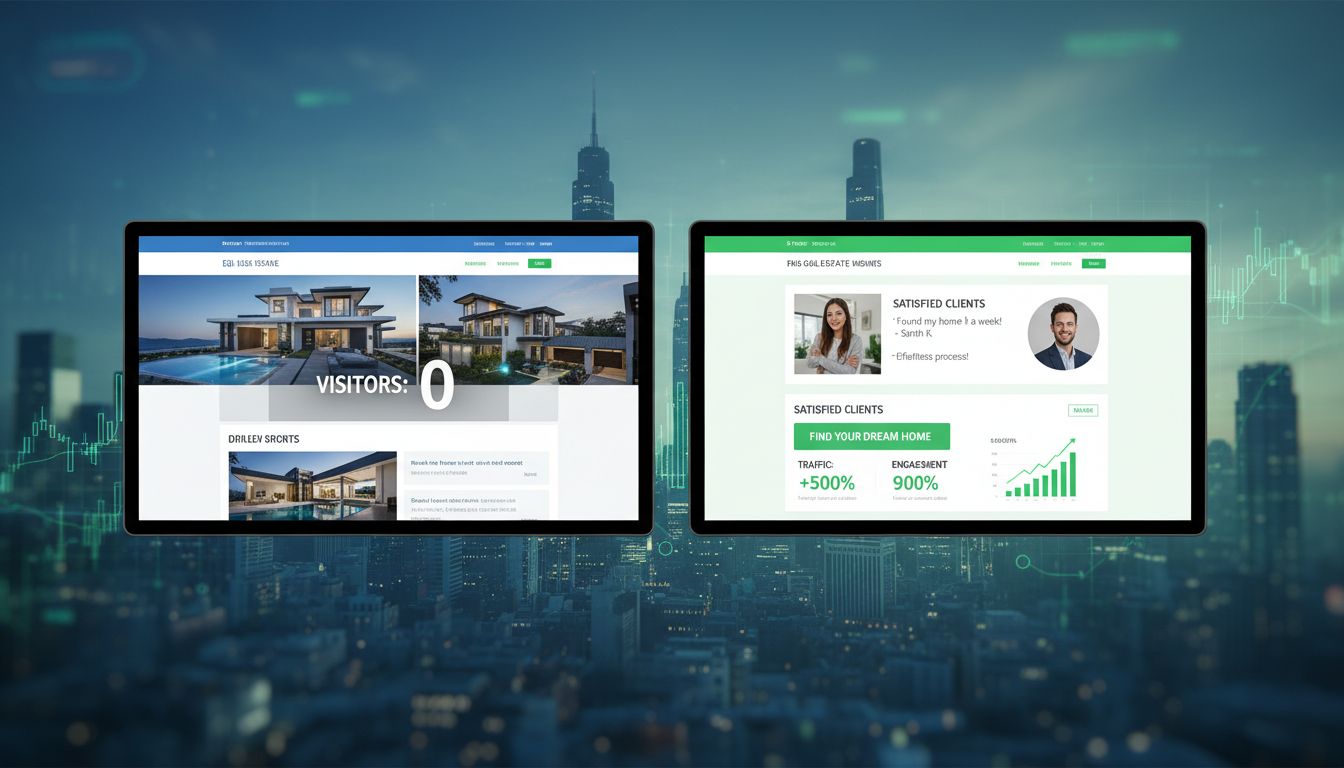
One of the surprising discoveries I’ve made while working with real estate agents is that many have beautiful photos, incredible listings, and years of experience. However, their websites were completely devoid of visitors and leads.
The truth is that a real estate marketing website should be much more than an attractive brochure. I’ve worked with many small business owners on their marketing websites, and real estate agents are some of the most competitive when it comes to their online presence. This is because 97% of home buyers start their search on the web, and if your website is not optimised properly, it will fail to appear in search results. In addition, your website needs to be able to attract and convert visitors into leads.
So, how do you create a marketing website for real estate agents that actually generates leads? Below are some of the most valuable tips for creating a real estate marketing websites that convert visitors into leads and helps you stand out from the competition.
Table of Contents
Why Pretty Pictures Aren't Enough
I understand that you’ve invested a lot of money into beautiful pictures of your properties, but your website needs to be able to do more than just show off your real estate listings. It needs to convince people to contact you instead of one of your competitors. Your website needs to appear in search results so that people can find you. It needs to be able to convert website visitors into leads by making it easy for them to contact you.
When someone wants to research a particular topic or buy a product or service, the first place they go is Google. They look through the search results and click on the ones that seem to best answer their query. This is the same process that people use when looking for real estate agents and buying a home. If your website does not appear in search results, you will fail to attract visitors.
If your website appears in search results but looks unprofessional, people will go to your competitors’ websites instead. A strong online presence is essential if you want to succeed as a real estate agent.
1. Essential Design Elements That Drive Results
Below are some of the most important design elements that should be present on any real estate website.
Mobile Responsiveness
More than half of all website traffic comes from mobile devices, which means that your real marketing estate website must be mobile responsive. In other words, it should look good and function properly on smartphones and tablets. If your website looks terrible or is hard to navigate on mobile devices, you will lose potential leads.
Navigation
Your real estate website’s navigation should be simple and intuitive. It should be easy for people to get from one page to another. I’ve seen many real estate agents fail because they put too much information on their homepage, overwhelming website visitors. It’s best to make your website’s navigation as simple as possible.
Visuals and Performance
As mentioned above, it’s important to make your website look beautiful. However, you shouldn’t sacrifice performance for aesthetics. Your website should have high-quality images of properties, but they shouldn’t be so large that your website’s loading time suffers. Anything more than 3 seconds, and you risk losing potential leads. You can accomplish a balance between performance and visuals by optimising your images.
Contact Information Visibility
Make sure that your contact information is easy to find on your website. It should be visible on every page, so people can contact you right away. You can even add a floating contact button so that your number and email address are always in view. This way, anyone can contact you without having to search for your information.
Building Trust Through Your About Page
Many real estate agents make the mistake of neglecting their about page. In fact, it’s one of the most important pages on marketing websites for real estate agents. People want to know who they’re dealing with before they hire you, which is why your about page is so important. Make sure to make it engaging and personable. Avoid using generic language and tell people about who you are as a person and what makes you different from other real estate agents. You should also include professional pictures of yourself on your about page, as well as casual pictures if you have any.
2. SEO Strategy That Gets Your Website Found
One of the biggest challenges that real estate agents face when it comes to their websites is search engine optimisation . SEO is the process of optimising your website so that it ranks higher in search results. This way, your website will be easier to find by people searching for real estate agents in your area.
Location-Based Keywords
When it comes to real estate SEO, you should always use location-based keywords. If you’re a real estate agent based in Melbourne, for example, you should always include Melbourne in your page titles, headings, and property descriptions. This way, people searching for real estate agents in Melbourne will be able to find you more easily. You should also create content about the different areas you work in, such as Melbourne suburb guides. This type of content is valuable to people searching for real estate agents, as it helps them find the right one for their needs.
Blog Posts and Content Marketing
Creating blog posts is a great way to improve your real estate website’s SEO while also providing valuable information to your leads. You can write about many different topics related to real estate, such as the local property market or first-time home buyer’s guides. The more blog posts you have on your website, the more content there is for search engines to index, increasing your chances of ranking higher in search results.
3. Technical SEO Basics You Can't Ignore
Below are some of the most important technical SEO best practices that every real estate agent should implement on their website.
SSL Certificate
An SSL certificate is a security certificate that makes your website secure and trusted by search engines and visitors. Your real estate website should always have an SSL certificate, as it builds trust with your leads. In addition, Google prioritises secure websites in its search results, giving you a higher chance of ranking.
Page Speed
Your real estate website’s page speed is another important ranking factor. You can use Google PageSpeed Insights to test your website’s speed and see what recommendations Google has for improving it. In most cases, you can improve your page speed by optimising your images.
XML Sitemap
Another technical SEO best practice is to create an XML sitemap and submit it to Google Search Console. This helps Google better understand your real estate website’s structure so that it can index your web pages more efficiently.
4. Content That Turns Visitors Into Clients
Now that your real estate website is optimised and attracting visitors, you need to focus on turning these visitors into leads. Below are some of the best ways to do that.
Compelling Property Descriptions
When it comes to property listings, you need to make sure that they’re not only informative but also engaging. You should always include eye-catching descriptions of the properties you’re selling or renting. Avoid generic descriptions such as “three-bedroom house with a large backyard.” Instead, use more engaging language, such as “imagine your children playing in this beautiful backyard while you enjoy your morning coffee on the covered patio.”
Virtual Tours and Video
You should always include virtual tours and videos on your property listings, as they allow potential buyers to get a good look at the property before contacting you.
Clear Call-to-Action Buttons
Make sure to include clear call-to-action (CTA) buttons throughout your real estate website. CTAs are buttons that encourage website visitors to take action, such as contacting you or scheduling a property viewing. The most important CTAs are the ones that appear on your property listings.
Lead Capture Forms That Actually Work
One of the biggest mistakes that real estate agents make is putting too much information in their contact forms. Nobody wants to fill out a contact form with 15 fields when all they want to do is ask a simple question. Your contact forms should only have a few fields, such as the visitor’s name, email address, phone number, and message. In addition, make sure to give website visitors an incentive for providing their contact information, such as a free local guide or market report.
5. Marketing Tools That Enhance Your Website
Your real estate marketing website should work in conjunction with the rest of your marketing efforts. Below are some of the best marketing tools that you can use to boost your real estate website’s performance.
Email Marketing Integration
Email marketing is one of the most effective ways to market your real estate business, as it allows you to stay in touch with your leads and customers. You can use email marketing software to collect email addresses from your website and send regular newsletters to your subscribers.
Social Media Integration
Integrating social media into your real estate website is a great way to boost your online presence. In addition to appearing more active on social media, you can use social media feeds on your real estate website to showcase your latest social media posts without having to update your website constantly.
Testimonials and Reviews
Customer testimonials and reviews are some of the most powerful marketing tools you can use to promote your real estate business. They help build trust with potential leads, so make sure to display them on your real estate website.
A solid real estate marketing plan will utilise these marketing tools to create a powerful online presence that drives real results.
Analytics and Tracking: Know What Works
Now that your real estate marketing website is up and running, it’s time to start tracking your results. You can use Google Analytics to monitor your real estate website’s performance. In particular, make sure to keep an eye on the traffic stats, such as the number of visitors, bounce rate, and exit pages. In addition, set up goals in Google Analytics so that you can track your conversion rate and see which pages on your real estate website are the most effective at generating leads.
When it comes to lead generation, make sure to track where your leads are coming from so that you can invest more time and effort into the channels that generate the most leads for you.
6. Examples of Real Estate Websites That Get It Right
The Oppenheim Group
The Oppenheim Group’s website is a great example of a real estate website done right. It has a beautiful design, intuitive navigation, and compelling CTAs that encourage website visitors to take action.

The Altman Brothers
The Altman Brothers’ website showcases the brand’s personality while also making it easy for visitors to search for properties for sale and contact the real estate agency.

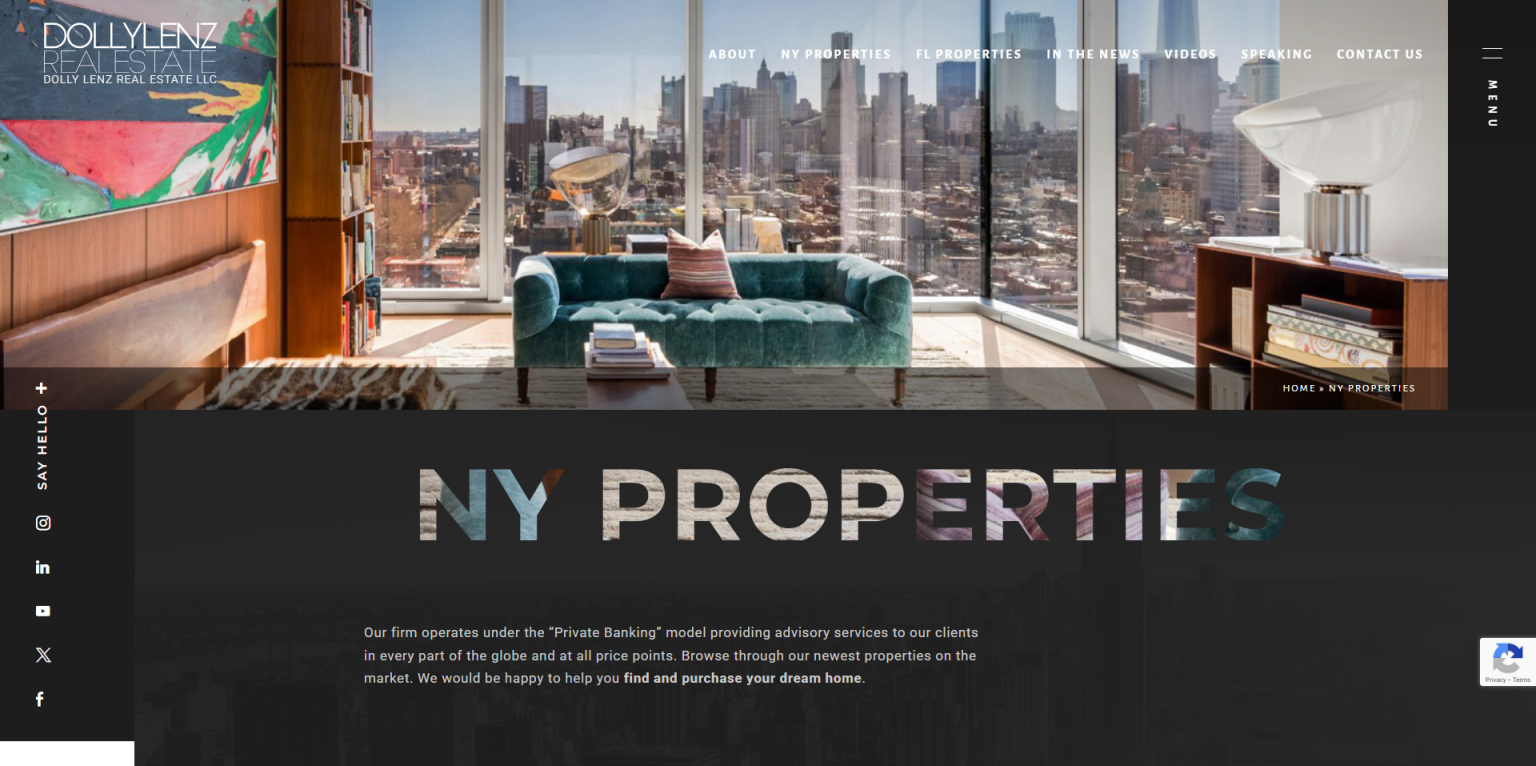
Dolly Lenz
Dolly Lenz’s website is another great example of a real estate website that does many things right. It has beautiful pictures of properties for sale, engaging descriptions, and a clean design that makes it easy to navigate.
7. Common Mistakes That Kill Website Performance
Below are some common mistakes that real estate agents make that hurt their website’s performance.
Auto-Playing Media
Never use auto-playing videos or music on your real estate website, as it will turn off many website visitors.
Outdated Listings
Make sure to update your property listings regularly, as outdated listings will turn off potential buyers.
Hidden Contact Information
Always make sure that your contact information is easy to find, as it builds trust with website visitors. One of the best ways to do that is to put your phone number in the header of your real estate website so that it’s always visible.
Neglecting Mobile Users
It’s a common mistake made by many real estate agents to neglect mobile users by not optimising their real estate websites for mobile devices. At this point, mobile responsiveness should be table stakes, as more than half of all website traffic comes from mobile devices.
Forgetting About SEO & AEO (Answer Engine Optimization)
Many real estate agents make the mistake of neglecting SEO when building their real estate websites. This is a huge mistake, as SEO is one of the most important aspects of any real estate marketing website. Failing to optimise your real estate marketing website for search engines means that it will be much harder for people to find you online. In addition, many real estate agents rely too heavily on paid advertising and word of mouth, which is not a sustainable marketing strategy in the long run.
Remember that AI tools like ChatGPT and Google’s AI Overviews are changing how people find information. AEO is about structuring your real estate website so these tools pull your answers when buyers and sellers ask questions. Clear FAQs, direct answers, and well-organized content make your site more likely to be cited. Agents who adapt early will have a real edge.
Neglecting Legal Pages
Make sure to include legal pages, such as a privacy policy, on your real estate marketing website. This will make your real estate website more trustworthy in the eyes of search engines and visitors.
8. Budget Considerations for Your Real Estate Website
When it comes to building a real estate website, you have many options in terms of design and development. You can build a simple real estate website yourself for a small fee, or you can hire a professional web designer to build a custom real estate website for you. The truth is that building a real estate website can be expensive, especially if you want it to include IDX integration and generate leads.
Many real estate agents choose to use real estate website builders to create their websites, as they’re much more affordable than hiring a web designer. However, they often lack the necessary features to generate leads and improve SEO. Professional web designers, on the other hand, will be able to create a real estate website that looks great, has excellent SEO, and includes IDX integration. The final price will depend on the complexity of your real estate website, but it should cost anywhere between $3,000 and $10,000 on average. It’s important to remember that a real estate website is an investment, and it should pay off by helping you generate additional leads and sales.
In addition to the initial cost of building a real estate website, you should also budget for annual expenses, such as website hosting and maintenance. You should also consider investing in paid advertising to drive traffic to your real estate website while your SEO efforts are underway.
To help you understand the options, here is a quick breakdown of typical website paths.
| Website Type | Estimated Cost | Pros | Cons |
|---|---|---|---|
| DIY Builders (Wix/Squarespace) | $20 – $50 / month | Cheap, fast setup | Limited SEO, generic look |
| All-in-One Platforms (Real Geeks/BoomTown) | $200 – $1,500 / month | Integrated CRM, IDX included | Recurring monthly costs are high |
| Custom WordPress Design | $3,000 – $10,000+ (upfront) | Ownership, total control, bespoke look | Requires maintenance, higher upfront fee |
| Luxury Agency (Luxury Presence) | High setup + monthly | Stunning design, elite branding | Expensive, longer launch time |
9. IDX and MLS Integration
If you’re a real estate agent, it’s essential that your website has IDX integration so that it can display MLS listings. IDX is the standard technology used to display real estate listings on real estate websites. IDX integration allows you to showcase MLS properties on your real estate website so that buyers can search for homes for sale.
Make sure that your IDX provider offers mobile-responsive search so that buyers can search for properties on their mobile devices. In addition, your real estate website should include advanced search options so that buyers can easily narrow down their search results according to their price range, the number of bedrooms and bathrooms, and other criteria. A good IDX showcase will also keep buyers on your real estate website for longer, as it will provide them with the search experience they’re accustomed to.
10. Building Authority in Your Local Market
Your real estate marketing website should be able to position you as an expert in your local market. One of the best ways to do that is to create comprehensive guides about your local area.
You can write about everything from first-time home buyer’s guides to local market statistics. In addition, you should always highlight your expertise in your local market on your real estate website. This will help you attract local leads and build authority in your niche.
Frequently Asked Questions
How much does a real estate website cost?
A real estate website can be as cheap as a few hundred dollars or as expensive as $10,000+. The final price will depend on many factors, including the complexity of your real estate website and the person or company you hire to build it.
Do I need IDX on my real estate website?
Yes, you should always have IDX on your real estate website, as it allows you to showcase MLS property listings on your site.
What is the most important feature of a real estate website?
The most important feature of a real estate website is mobile responsiveness, followed by contact information visibility and performance.
How long does SEO take to work for a real estate website?
SEO typically takes 3-6 months to start driving traffic to your real estate website, which is why it’s so important to start working on it as early as possible.
Can I build a real estate website myself?
Yes, you can build a real estate website yourself using real estate website builders. However, it’s important to remember that you’ll need to dedicate a lot of time and effort to it.
What should I put on my about page?
You should put information about who you are as a person on your about page. This is one of the most important pages on your real estate website, as it helps you build trust with your website visitors. You should also include pictures of yourself on your about page.
How can I get more leads from my real estate website?
You can get more leads from your real estate website by shortening your contact forms, providing valuable free information, including clear calls to action, and prominently displaying testimonials. In addition, make sure your real estate website is optimised for local search so that it can attract more local leads.
Conclusion
Creating an effective real estate marketing website takes time and effort, but the payoff can be enormous. Your real estate marketing website should be aesthetically pleasing, easy to navigate, optimised for search engines, and able to convert website visitors into leads. By implementing the tips and tricks mentioned in this guide, you will be able to create a real estate marketing website that will help you dominate your local real estate market for years to come.
You can write about everything from first-time home buyer’s guides to local market statistics. In addition, you should always highlight your expertise in your local market on your real estate website. This will help you attract local leads and build authority in your niche.
Is Your Website Holding You Back? See exactly what’s working, what’s not working, and what’s quietly holding you back with a free website growth roadmap powered by our sophisticated AI.