

Real estate SEO works by optimizing a brokerage or agent website to rank higher in local search engine results for property-related queries. Many professionals ask, how does real estate SEO work to generate consistent business? The process involves improving technical website performance, targeting specific local keyword phrases, creating comprehensive neighborhood guides, and securing local business citations.
Competition in the United States housing market remains incredibly fierce. Relying solely on paid advertising or third-party portals severely limits your long-term growth potential. Buyers and sellers turn to Google first when researching property values and local agents.
A strong organic search strategy puts your brand directly in front of these high-intent prospects before they contact a competitor. This guide explains exactly how does real estate SEO work within the property sector. You will learn the exact steps required to build a sustainable pipeline of organic leads.
Search engines want to connect users with the most relevant, authoritative local information. When someone searches for "realtors in Austin TX" or "homes for sale in Denver," Google scans its index for the best match. Real estate SEO aligns your website content with these specific user intents to capture organic search results.
The algorithm evaluates hundreds of ranking factors to determine which agent deserves the top spot. These factors include website speed, mobile responsiveness, local relevance, and the quality of your property descriptions. You must prove to search engines that your website represents a legitimate, highly trusted local authority.
This optimization process requires continuous effort across multiple digital touchpoints. You cannot simply stuff keywords onto a page and expect to rank above established brokerages. Success demands a calculated mix of technical improvements, high-quality content creation, and off-page authority building.
Target long-tail keywords like "condos for sale in [Neighborhood] near [Landmark]" rather than broad terms like "New York real estate." Long-tail searches typically convert at a much higher rate because the user knows exactly what they want.
Why Agents Need a Real Estate SEO Strategy to Compete
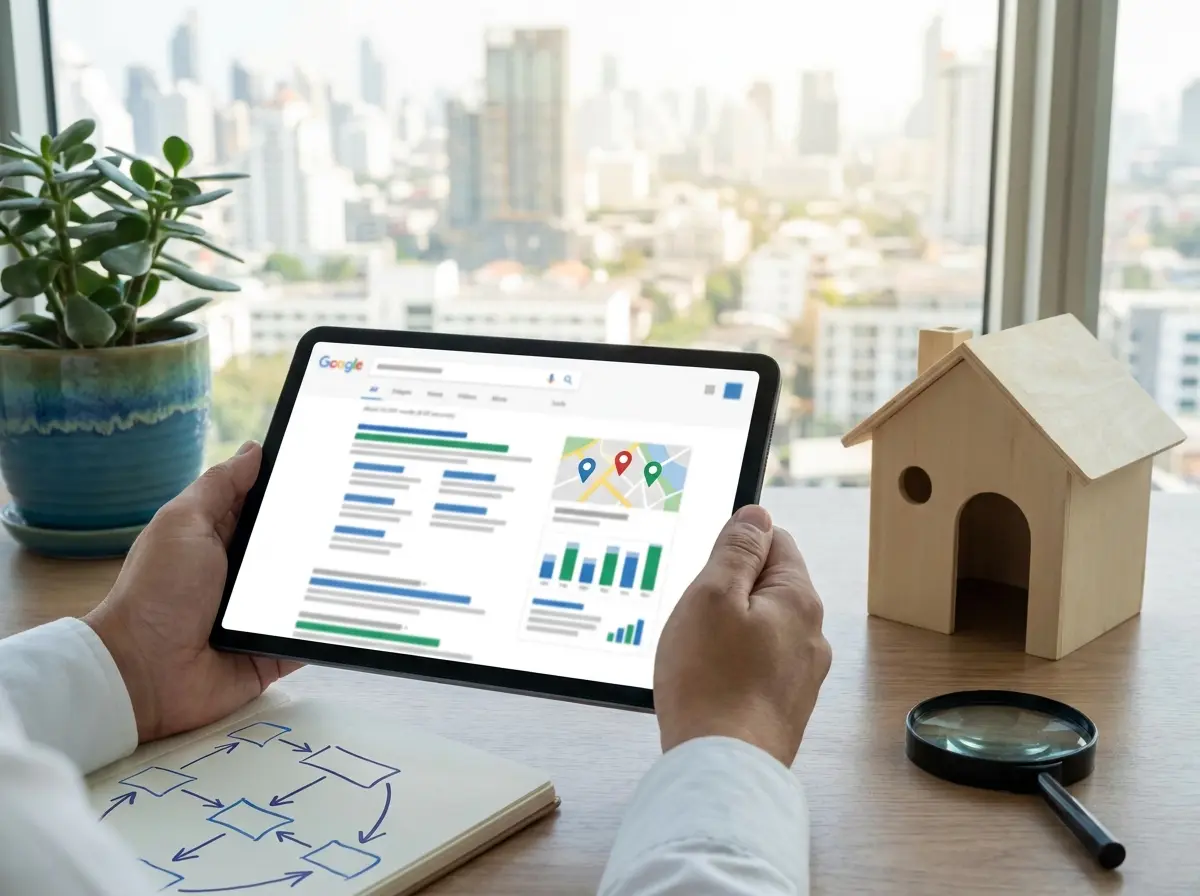
According to the National Association of Realtors, over 90 percent of home buyers use the internet during their property search. If your website does not appear on the first page, you are invisible to your target market. Organic search visibility provides a sustainable lead pipeline that persists without ongoing ad spend.
Third-party aggregator sites dominate the top search results for broad property queries. Competing directly against these giants requires a highly localized approach. By focusing on specific neighborhoods and hyper-local market data, independent agents can capture valuable traffic that aggregators often miss.
High-ranking local search results also build immediate trust with potential clients. Users inherently trust Google's recommendations. Appearing at the top of local search results signals that you are a prominent, established professional in your specific market.
- Organic search provides a sustainable lead pipeline that outlasts paid advertising budgets.
- Hyper-local targeting allows independent agents to compete with massive property aggregator websites.
- High search rankings instantly establish brand authority and build trust with prospective clients.
Core Components of a Successful Real Estate SEO Strategy

A successful property search strategy relies on three main pillars working together. You need a fast website, localized content, and strong external signals indicating your authority. Missing any of these elements severely restricts your ability to rank well for competitive real estate keywords.
Local SEO for Real Estate: Optimizing Your Google Business Profile
Local SEO forms the absolute foundation of any real estate search strategy. Your Google Business Profile acts as your digital storefront in local map results. You must claim, verify, and fully populate this profile with accurate contact information and high-quality images to improve local search results.
Consistency across all local directories strongly influences your local search rankings. Your name, address, and phone number must match exactly on Yelp, local chamber of commerce websites, and industry directories. Search engines use these citations to verify your business location and legitimacy.
Client reviews play a massive role in both rankings and conversion rates. Actively request reviews from satisfied buyers and sellers. Respond to every review professionally, as Google factors business engagement into its local ranking algorithms.
Creating Neighborhood Guides as a Real Estate SEO Strategy
Neighborhood guides serve as the ultimate content asset for property professionals. Prospective buyers want detailed information about schools, commute times, local amenities, and property taxes. Creating comprehensive guides for specific communities establishes you as the definitive local expert while targeting real estate keywords.
These pages naturally attract highly qualified organic traffic. When you provide genuine value about a community, visitors spend more time on your site. This increased dwell time sends positive engagement signals back to search engines, boosting your overall domain authority.
Include original photos, video tours, and interviews with local business owners in your guides. This original media prevents your content from looking like generic, scraped data. Following Google's helpful content guidelines heavily rewards original, people-first information.
Technical SEO for Real Estate Property Listings and Site Speed
Technical SEO involves optimizing the underlying code and structure of your website. Real estate websites often feature thousands of dynamically generated property listings. If search engine bots cannot efficiently crawl and index these pages, your properties will not appear in search results.
Website speed is a critical ranking factor, especially for mobile users. Compress large property images and utilize content delivery networks to reduce load times. Slow-loading property galleries frustrate users and cause them to abandon your site immediately.
Implement proper schema markup for your real estate listings. Schema markup is a specialized code that helps search engines understand specific data points like price, square footage, and property type. This code can trigger rich snippets in search results, dramatically improving your click-through rate.
Be extremely careful with IDX (Internet Data Exchange) integrations. Poorly implemented IDX feeds can create thousands of duplicate content pages, which often trigger severe algorithmic penalties from search engines.
How to Build a Real Estate SEO Strategy: A Step-by-Step Guide
Executing an effective optimization campaign requires a structured, logical approach. You cannot simply guess what your audience wants to read. Follow these specific steps to build a foundation that generates consistent organic traffic.
How to Execute a Property SEO Campaign
Conduct Local Keyword Research
Use professional SEO tools to identify the exact phrases buyers use in your specific market. Focus heavily on localized intent, such as "best schools in [Neighborhood]" or "new construction homes in [City]."
Optimize Your Website Architecture
Organize your website into a logical hierarchy that search engines can easily understand. Create parent pages for major cities, and nest individual neighborhood guides underneath those parent pages.
Develop Hyper-Local Content
Write comprehensive guides, market reports, and blog posts that answer common client questions. Include specific data points about your local market that cannot be easily found on generic national websites.
Build Local Authority
Acquire backlinks from other relevant local businesses, news outlets, and industry associations. Consistently gather positive reviews on your Google Business Profile to demonstrate your reliability.
Key Metrics to Measure Your Real Estate SEO Strategy Success
Tracking the right key performance indicators determines the success of your real estate marketing efforts. Focus on metrics that directly impact your bottom line rather than superficial vanity numbers. A high volume of traffic means nothing if those visitors do not convert into active clients.
Monitor your organic traffic growth using Google Analytics. Look specifically at the traffic flowing to your localized neighborhood pages and property listings. An upward trend in organic sessions indicates that search engines view your site as increasingly relevant.
Track your conversion rates from organic search. Measure how many organic visitors fill out contact forms, sign up for property alerts, or call your office directly. You can set up specific event tracking in Google Analytics to monitor these crucial actions.
Pay close attention to your local keyword rankings over time. Use professional rank tracking software to monitor your position for high-value terms. While rankings fluctuate daily, the long-term trend over several months should show steady improvement.
- Prioritize conversion metrics over raw traffic numbers to measure true ROI.
- Track organic traffic specifically landing on your local neighborhood guides.
- Monitor local keyword rankings over a period of months, ignoring daily fluctuations.
Frequently Asked Questions About Real Estate SEO
How long does real estate SEO take to show results?
Search engine optimization typically requires three to six months to generate noticeable improvements in traffic and rankings. Real estate represents a highly competitive industry, meaning it takes time to build sufficient authority to outrank established competitors. Consistent content creation and technical improvements will ultimately accelerate this timeline.
Should I hire an agency or do real estate SEO myself?
Independent agents can manage basic local optimization, like claiming their Google Business Profile and gathering client reviews. However, comprehensive technical optimization and content strategy usually require specialized expertise. Partnering with an experienced agency allows you to focus on closing deals rather than writing code.
Does blogging help sell houses?
Yes, strategic blogging directly supports property sales by capturing buyers in the early research phase. Articles about local market trends, mortgage rates, or neighborhood developments build trust before the buyer is ready to contact an agent. These posts also generate valuable internal links to your core property listings.
How much does real estate SEO cost?
Professional search optimization services for property firms typically range from $1,500 to $5,000 per month in the United States. The exact cost depends on the size of your target market, the current state of your website, and the aggressiveness of your growth goals. According to industry pricing surveys, specialized local campaigns demand proper investment to yield high-quality leads.
Can I outrank Zillow and Realtor.com?
You rarely need to outrank major portals for broad national or state-level keywords. Instead, you can outrank them for hyper-local, long-tail search queries. Major portals cannot provide the deep, nuanced community insights that a local expert can deliver on a neighborhood-specific landing page.
Conclusion
Implementing a robust search optimization strategy transforms your website from a digital business card into a scalable lead generation engine. By focusing on technical performance, hyper-local content, and authoritative external signals, you position your brand directly in front of active buyers and sellers. This organic visibility provides a distinct competitive advantage in any housing market.
Stop losing valuable local commissions to competitors with better digital visibility. Evaluate your current website performance, identify your most profitable local neighborhoods, and begin creating the high-value content your future clients are searching for today. If you lack the internal resources to execute this strategy effectively, consider consulting with a specialized digital marketing partner to accelerate your growth.