

Learning how to get a real estate website on the first page of Google comes down to three things working together: a technically sound website, content built around the local phrases buyers and sellers actually search, and steady authority signals such as Google Business Profile reviews and quality backlinks. Agents who commit to this proven real estate SEO process typically see measurable ranking gains within three to six months.
The payoff is substantial. Research from the National Association of Realtors shows that nearly all home buyers use the internet during their search, and a Backlinko analysis of click-through rates found that the top organic result captures about 27.6% of all clicks. Page two, by comparison, is functionally invisible to prospective property clients.
This comprehensive guide breaks down how Google ranks real estate websites, which high-intent real estate keywords deserve your attention, and the specific search engine optimization actions that move a site from obscurity to page one.
Google ranks real estate websites using three broad systems: content relevance, authority earned through backlinks, and page experience. For searches with local intent, a separate local algorithm weighs relevance, distance, and prominence, as explained in Google’s own documentation. Your website and your Google Business Profile feed different parts of this equation.
Real estate also falls into what Google calls “Your Money or Your Life” territory, because buying a home is a major financial decision. Quality raters look harder at experience, expertise, authoritativeness, and trust on these sites. Named agents, real brokerage details, licensing information, and genuine local knowledge all feed those trust signals.
One more reality shapes your strategy: portals like Zillow, Redfin, and Realtor.com dominate broad terms such as “homes for sale in Dallas.” Independent agents win by targeting specific neighborhoods, long-tail phrases, and the local map pack, where portals compete far less effectively.
- Google weighs relevance, authority, and page experience; local searches add distance and prominence to the mix.
- Real estate content faces extra trust scrutiny, so show real names, credentials, and local expertise.
- You will rarely outrank Zillow on broad terms, so target neighborhoods, long-tail phrases, and the map pack.
Real Estate Keyword Strategy: What Keywords Should Your Real Estate Website Target?

The best keywords for a real estate website are long-tail, location-specific phrases with clear intent, such as “homes for sale in Lakeview Chicago” or “sell my house fast in Tempe.” Broad terms like “real estate” are dominated by national portals and deliver little value to a local brokerage.
Sort every target keyword by search intent before building a page around it. Transactional phrases deserve listing and service pages, while informational questions fit blog posts and guides. A simple framework looks like this:
| Keyword type | Example | Best page type |
|---|---|---|
| Transactional | condos for sale in Austin TX | Community or listings page |
| Service | listing agent in Plano TX | Service page |
| Informational | how much is my home worth in Denver | Blog post or valuation tool |
| Relocation | moving to Scottsdale AZ guide | Neighborhood guide |
Use free keyword research tools like Google Keyword Planner and Google Search Console to confirm real search volume. Prioritize terms where current page-one results include other local agents rather than only national portals, because that signals a winnable query.
Local Real Estate SEO: Why Is Local SEO the Fastest Route to Page One?
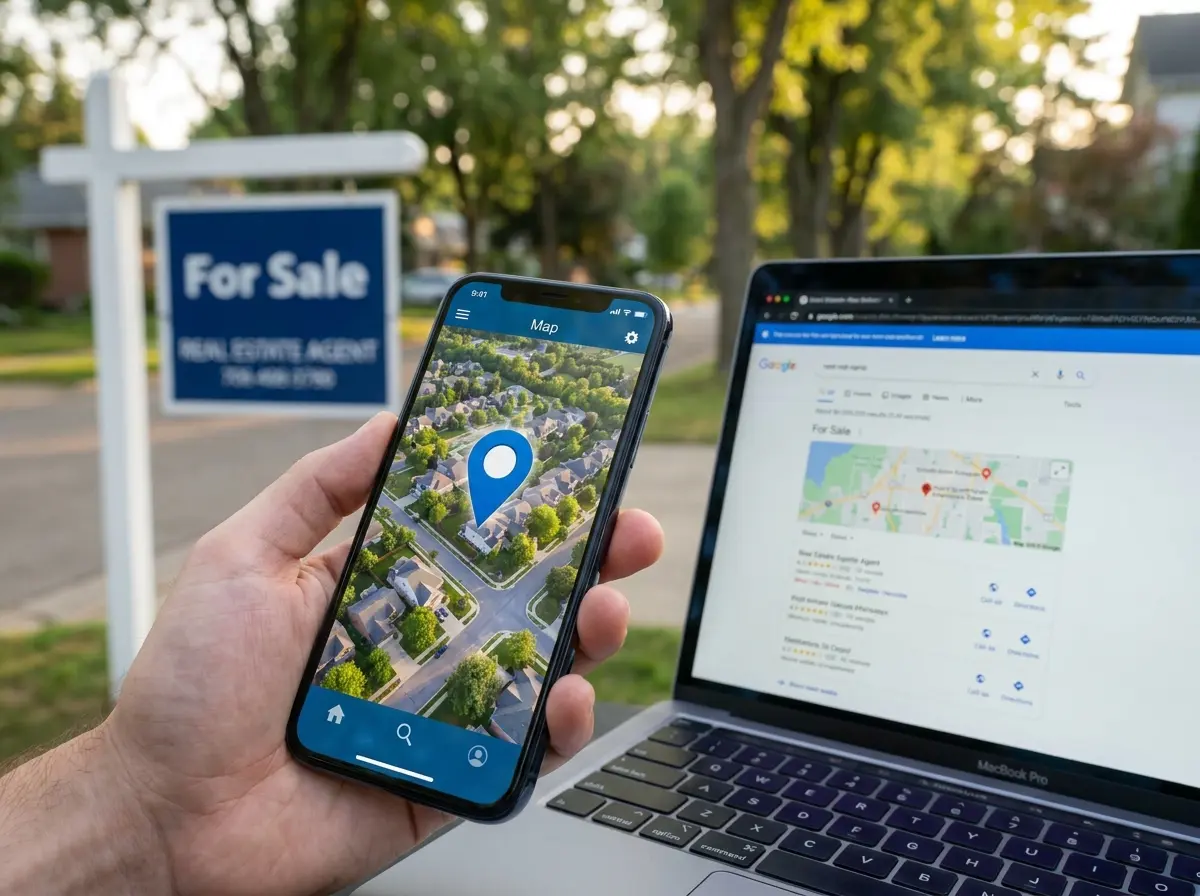
Local SEO is the fastest route because the map pack appears above organic results for most city-based and “near me” searches. It is driven heavily by your Google Business Profile rather than your website’s raw authority, so a well-optimized profile can place a one-person brokerage next to national brands within weeks.
- Claim and verify your Google Business Profile, choosing “Real Estate Agency” or “Real Estate Agent” as your primary category.
- Complete every field: service areas, hours, photos, and a description that mentions your core markets.
- Ask every client for a review after closing, and respond to each one you receive.
- Keep your name, address, and phone number identical across Zillow, Realtor.com, Yelp, and your chamber of commerce.
Reviews deserve special attention. The BrightLocal Local Consumer Review Survey consistently finds that the vast majority of consumers read reviews before choosing a local business. Review count, recency, and rating all influence local rankings, and our guide to Google Business Profile optimization covers the full setup process.
Ask for reviews at the closing table, not weeks later. Clients are most enthusiastic right after a successful transaction, and a steady trickle of fresh reviews beats a one-time burst.
On-Page Real Estate SEO: How Do You Optimize Your Pages and Content?
On-page optimization means giving every important page one clear target keyword, a compelling title tag, a single descriptive H1, and copy that genuinely answers the searcher’s question. Google explains these fundamentals in its SEO Starter Guide, and they apply directly to real estate sites.
Here is the uncomfortable truth about most agent websites: IDX listing pages rarely rank. The same listings appear on thousands of sites, so Google treats them as duplicate content. Original pages about neighborhoods, school districts, and market trends give Google something it cannot find elsewhere.
Build your real estate content marketing around these assets:
- Neighborhood and community guides with original photos, school data, and local insight
- Quarterly market reports featuring your own analysis of MLS data
- Service pages for buying, selling, relocation, and the property types you specialize in
- Posts answering real questions about closing costs, timelines, and inspections
Add structured data where it fits, since RealEstateAgent and LocalBusiness schema help Google understand who you are. Internal links between related pages spread authority and keep visitors reading longer.
Real Estate Link Building: How Do Backlinks Build Your Site’s Authority?
Backlinks are votes of confidence from other websites, and they remain one of Google’s strongest ranking signals. For a local brokerage, the best links come from genuinely local sources rather than generic directories.
So where do local agents actually find these links? Sponsor a youth sports team or charity event, pitch your market data to local journalists, and join your chamber of commerce. One link from a local newspaper often outweighs fifty low-quality directory listings.
Real Estate Technical SEO: What Technical Issues Can Hold Your Site Back?
Technical problems can cap your rankings no matter how good your content is. The most common culprits on real estate sites are slow load times from oversized listing photos, poor mobile usability, missing HTTPS, and crawl errors that keep pages out of Google’s index entirely.
Google measures experience through Core Web Vitals: main content should load within 2.5 seconds, interactions should respond within 200 milliseconds, and layouts should stay visually stable. You can test your site for free with PageSpeed Insights and review the thresholds in the Core Web Vitals documentation. Compress listing images, enable lazy loading, and choose a host with fast server response times.
Finally, submit an XML sitemap through Google Search Console and check the Pages report monthly. If important pages show indexing or duplicate content flags, fix those before publishing anything new.
- IDX listing pages are duplicate content; original neighborhood and market pages are what actually rank.
- Local links from news outlets, sponsorships, and community groups carry outsized weight.
- Hit Core Web Vitals thresholds: LCP under 2.5 seconds, INP under 200 milliseconds, CLS under 0.1.
SEO Action Plan: How to Get a Real Estate Website on the First Page of Google
Executing an organized search engine optimization process ensures steady organic traffic growth. Here is the sequence that works, condensed into six moves you can start this week.
How to Get a Real Estate Website on the First Page of Google
Baseline Your Current Position
Set up Google Search Console and claim your Google Business Profile, then record where you rank for ten target phrases. You cannot improve what you have not measured.
Fix Technical Foundations
Resolve speed, mobile usability, HTTPS, and indexing problems first. Content built on a broken site will always underperform.
Map Keywords to Pages
Assign one primary keyword to each page: your homepage targets the city term, service pages target “agent” and “sell” phrases, and guides target neighborhoods.
Optimize and Publish Consistently
Rewrite title tags and copy on your core pages, then publish two to four pieces of local content each month without fail.
Build Reviews and Local Links
Ask every closing client for a Google review and pursue at least one local link opportunity per month through sponsorships, partnerships, or press.
Measure and Adjust Monthly
Review Search Console every month and improve pages sitting in positions 5 through 15. Small gains there often tip a page onto page one.
Common SEO Mistakes: What Mistakes Keep Real Estate Sites Off Page One?
Most ranking failures trace back to a handful of avoidable errors. Recognizing them early saves months of wasted effort and helps maintain consistent search momentum.
- Relying on IDX listings as your only content
- Stuffing city names into every sentence instead of writing naturally
- Neglecting your Google Business Profile for months at a time
- Quitting at month two, right before compounding gains typically appear
Avoid buying link packages or creating thin doorway pages for every suburb. Google easily identifies manipulative backlink practices, which can trigger penalties that wipe out your search visibility.
Real Estate SEO: Frequently Asked Questions
How long does it take to get a real estate website on the first page of Google?
Most real estate websites start achieving page-one rankings within three to six months of persistent optimization. Highly competitive metropolitan regions often require six to nine months of consistent local link building, technical fixes, and neighborhood content expansion.
Can an independent real estate agent outrank national portals like Zillow?
Independent agents routinely outrank Zillow, Realtor.com, and Redfin for long-tail neighborhood queries and local map pack searches. While national aggregators control statewide searches, local brokerages possess authentic market insight that search engines reward in local queries.
What is the most effective SEO strategy for real estate websites?
The most dependable approach merges Google Business Profile optimization with deep neighborhood-focused content and genuine local backlinks. Focusing on high-intent buyer and seller searches provides sustainable organic leads without fighting portals for broad keywords.
The Bottom Line on Real Estate Google Rankings
Getting a real estate website on the first page of Google requires a combination of strong technical foundations, targeted local keywords, optimized content, and consistent authority-building efforts. Focusing on neighborhood-specific and long-tail searches, optimizing the Google Business Profile, collecting authentic client reviews, and earning quality local backlinks can help independent agents compete in local search. Technical factors such as site speed, mobile usability, indexing, and Core Web Vitals also need to be addressed to support stronger search performance.
A consistent SEO process is essential for building and maintaining search visibility over time. By measuring current rankings, mapping keywords to relevant pages, publishing original local content, building reviews and local links, and reviewing performance each month, real estate professionals can steadily improve their rankings. Avoiding common mistakes such as relying only on IDX listings, neglecting the Google Business Profile, using manipulative link practices, or abandoning SEO too early helps maintain sustainable progress toward page-one visibility.