
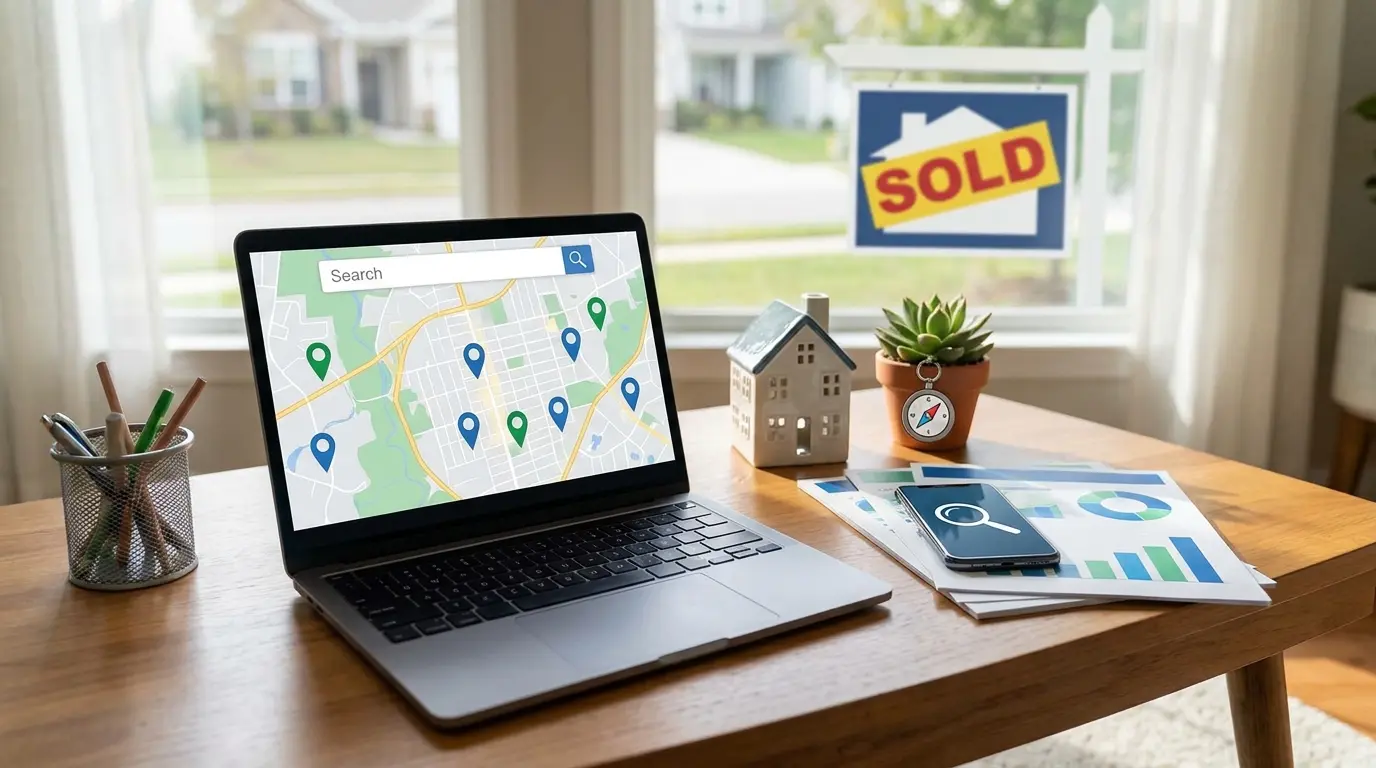
To learn how to improve real estate website rankings, you must optimize your Google Business Profile for local search. Creating hyper-local neighborhood pages and integrating fast-loading IDX listings are also essential steps for modern agents. You should also acquire high-quality backlinks from local businesses while fixing technical issues like slow page speeds.
Real estate agents face fierce competition for visibility on search engine results pages (SERPs). Buyers and sellers turn to Google first when researching homes, neighborhoods, and local market trends. If your brokerage does not appear on the first page, you lose valuable leads to competing firms and massive aggregator portals.
Many agents struggle to outrank these national portals because they rely on generic content and poorly optimized property feeds. Beating the aggregators requires a highly localized approach that emphasizes your specific market expertise. Implementing a targeted search engine optimization strategy helps you capture high-intent traffic from people actively looking to buy or sell property in your area.
National real estate portals dominate broad search terms like "homes for sale in Texas." Competing directly against these multi-billion dollar companies for broad keywords rarely yields a positive return on investment. Instead, real estate professionals win by dominating long-tail, hyper-local search queries that target specific buyer needs.
Local SEO focuses on optimizing your digital presence for specific neighborhoods, subdivisions, and condo buildings. A homebuyer searching for "waterfront condos in downtown Miami" demonstrates much higher purchase intent than someone searching for "Florida homes." By targeting these specific geographic queries, you attract qualified leads who are closer to making a transaction.
Search engines prioritize relevance and proximity for localized searches to ensure a high-quality user experience. They want to show users the most accurate, authoritative information about a specific community. Demonstrating deep local expertise signals to algorithms that your website provides better, more specific answers than a generalized national portal.
- Stop competing with national portals for broad search terms.
- Target specific neighborhoods and subdivisions to capture high-intent buyers.
- Prove your community expertise to satisfy search engine algorithms.
SEO Guide: How to Improve Real Estate Website Rankings Through Optimization
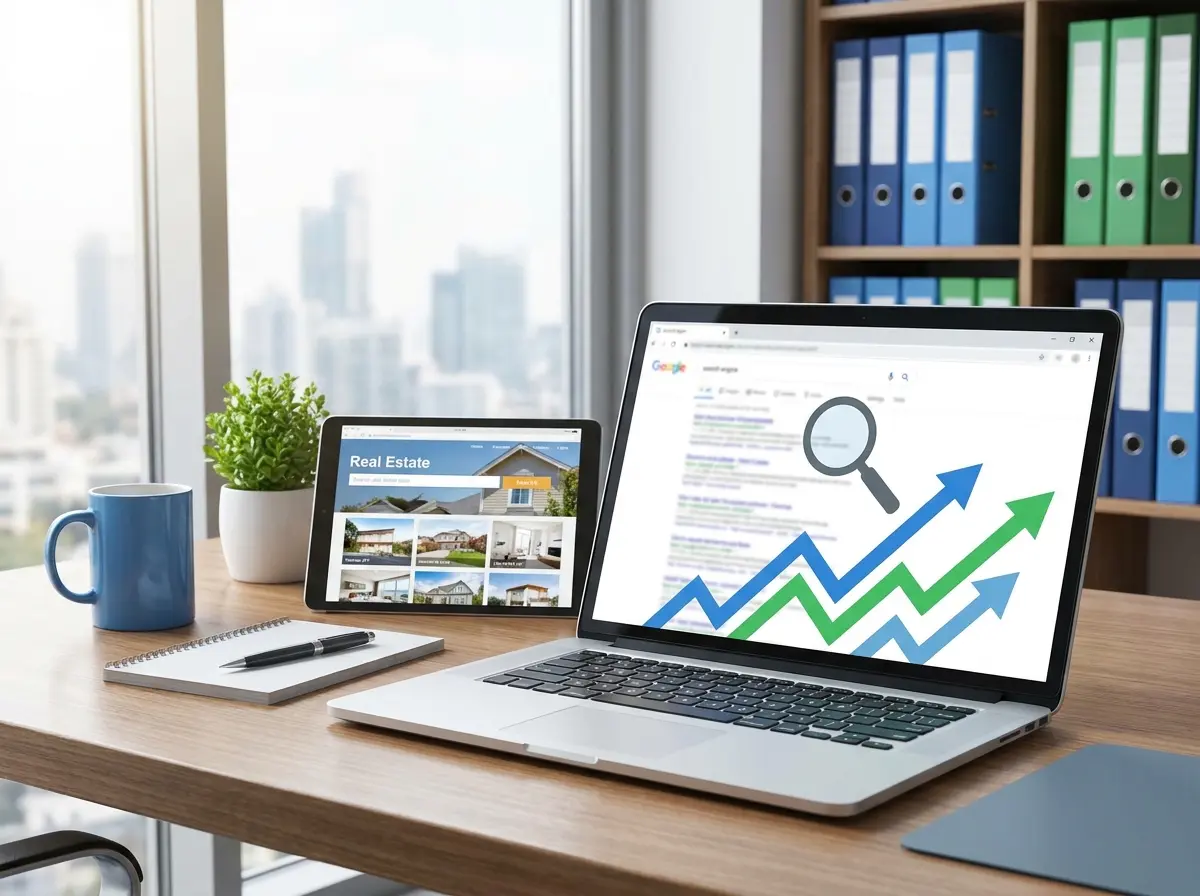
Effective optimization requires a combination of technical foundation, authoritative content, and strong off-page signals. You cannot rely on a standard template website with a basic property feed to drive organic traffic. Winning requires deliberate action across multiple categories of search engine optimization.
Create Hyper-Local Neighborhood Pages for Real Estate SEO Success
Neighborhood pages serve as the cornerstone of any successful real estate SEO strategy. These pages should provide comprehensive details about living in a specific community. Include information about local schools, parks, commute times, property tax rates, and historical price trends.
Do not copy descriptions from Wikipedia or the local chamber of commerce. Write original observations based on your actual experience selling homes in that area. Add high-quality, original photographs of the neighborhood amenities rather than relying on generic stock images.
Embed a filtered IDX feed on these pages showing active listings specific to that exact neighborhood. This satisfies the user's desire to see available homes while keeping them engaged on your domain for longer periods. High engagement metrics tell search engines your page provides immense value.
Update your neighborhood pages quarterly with fresh market statistics. Stale data drives users away and signals to search engines that your content is outdated.
Optimize Your Google Business Profile for Local Real Estate Search Visibility
Your Google Business Profile dictates your visibility in the local map pack. This map section frequently appears above standard organic results for queries containing "real estate agent near me." Claim and verify your profile immediately if you have not already done so.
Fill out every available field accurately. Use a consistent name, address, and phone number across all online directories. Select the most accurate primary and secondary categories for your specific real estate niche, such as "Real Estate Agency" or "Commercial Real Estate Inspector."
Gather reviews consistently from satisfied clients. Respond professionally to every review, whether positive or negative. Regular photo updates and posts about new listings or market trends keep the profile active, which Google rewards with better visibility.
Implement SEO-Friendly IDX Integration for Real Estate Property Listings
An Internet Data Exchange (IDX) feed displays MLS listings on your website. Many basic IDX plugins use framing technology that hides the listing data from search engine crawlers. If algorithms cannot read the property data, those listings will never rank in search results.
Select an IDX provider that creates indexable, individual URLs for every property listing. The provider should render the property data directly in the HTML of your pages. This allows search engines to crawl and index the addresses, descriptions, and features of the homes you display.
Write custom meta descriptions and title tags for your featured listings. While you cannot rewrite thousands of MLS descriptions, adding custom commentary to your own exclusive listings gives you a significant advantage over competitors using the same default feed.
How to Audit Your Real Estate Website's Technical SEO
Check Your Indexing Status for Real Estate SEO
Open Google Search Console to verify which pages are actually indexed. Look for crawl errors or pages that Google blocks from appearing in results.
Analyze Page Load Speeds
Run your domain through Google PageSpeed Insights. Identify large image files or heavy scripts that slow down your initial load time.
Test Mobile Usability
Navigate your website on a smartphone. Verify that property search filters work smoothly and text is completely legible without zooming.
Technical SEO: What Technical SEO Factors Impact Real Estate Website Rankings?
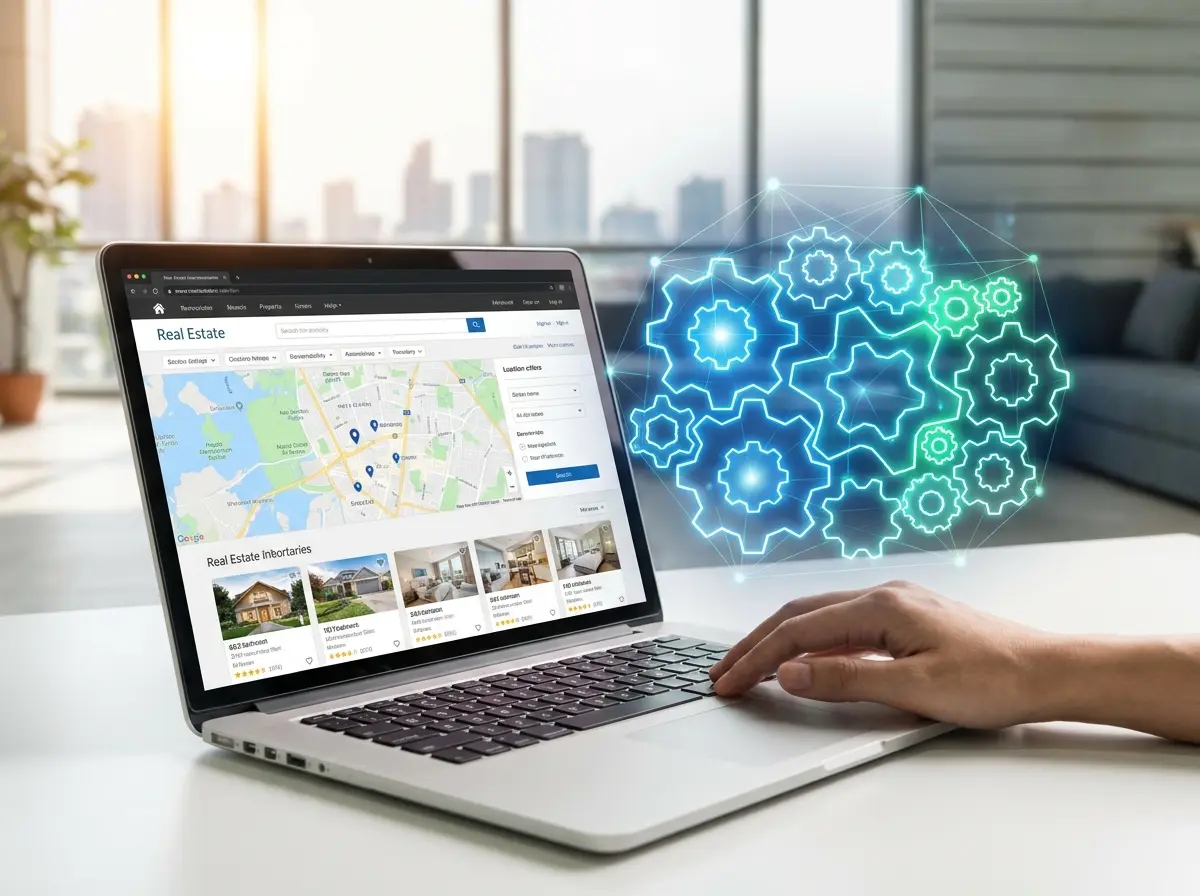
Great content cannot overcome a broken technical foundation. Search engines evaluate how easily their bots can crawl your site and how efficiently users can navigate it. Technical optimization establishes the baseline required for your site to compete effectively in local search results.
Improve Core Web Vitals and Page Speed for Better Real Estate Rankings
Real estate websites naturally require heavy image loads to display property photos. Large, unoptimized images cause pages to load slowly, which frustrates users and increases bounce rates. Google explicitly evaluates Core Web Vitals as a primary ranking factor.
Compress all property photos using modern formats like WebP before uploading them. Implement lazy loading so images below the fold only load when the user scrolls down to view them. Utilize a content delivery network to serve media files rapidly to users regardless of their geographic location.
Minimize the use of heavy scripts and third-party plugins. Evaluate every tracking code, chat widget, and popup script on your site. Remove any tools that cause significant delays in the initial page rendering process to improve organic search visibility.
Fix Mobile Responsiveness for Real Estate Search Engine Optimization
More than half of all real estate searches occur on mobile devices. Buyers frequently search for properties while driving through neighborhoods or attending open houses. Search engines predominantly use the mobile version of your website for indexing and ranking purposes.
Test your website on multiple devices to guarantee that property searches function seamlessly on small screens. Dropdown menus for price filters and neighborhood selections must be easy to tap with a thumb. Text should be legible without requiring the user to pinch and zoom.
Pop-up lead capture forms that cover the entire screen on mobile devices will trigger search engine penalties. Use subtle banner opt-ins instead of aggressive interstitials.
Link Building: How Can Real Estate Agents Build High-Quality Backlinks for SEO?
Backlinks function as digital votes of confidence from other websites. When authoritative domains link to your real estate blog or neighborhood pages, search engines view your site as more trustworthy. Earning these links requires a proactive outreach strategy within your local community to build domain authority.
Leverage Local Partnerships for Real Estate Backlink Building
You already work with mortgage brokers, title companies, home inspectors, and contractors. Ask these partners to link to your website from their preferred vendor pages. You can also offer to write guest articles for their blogs about the home buying process.
Write testimonials for local businesses you frequent and allow them to publish your quote with a link back to your domain. This tactic requires very little effort but yields highly relevant local links. Focus exclusively on legitimate businesses with professional websites.
Sponsor Community Events to Boost Local Real Estate Authority
Sponsoring local events provides excellent visibility and powerful backlink opportunities. Youth sports leagues, charity 5K races, and neighborhood festivals frequently maintain websites listing their sponsors. These local organizations often possess highly trusted domains.
Donate to local housing charities or volunteer your team for community clean-up days. Send a press release to local news outlets detailing your community involvement. News websites carry massive domain authority, and a single link from a local newspaper significantly boosts your search visibility.
- Compress images and use lazy loading to improve Core Web Vitals.
- Prioritize mobile responsiveness for all property search functions.
- Build local backlinks through sponsorships and vendor partnerships.
Frequently Asked Questions About How to Improve Real Estate Website Rankings
Search engines frequently pull answers directly from FAQ sections to populate rich snippets. Addressing common concerns head-on improves your chances of capturing these highly visible search features in the SERPs.
How long does it take to see SEO results for a real estate website?
It typically takes three to six months to see noticeable improvements in organic traffic. SEO requires consistent effort in content creation, technical adjustments, and link building. Highly competitive urban markets may require up to a year of sustained effort to achieve page-one rankings for competitive terms.
Should I buy backlinks to improve my rankings faster?
No, you should never purchase backlinks. Search algorithms easily detect paid link schemes and private blog networks. Participating in these practices often results in a manual penalty, which removes your website entirely from search engine results.
What is the best keyword for a real estate agent?
There is no single best keyword. The most valuable keywords combine your specific service with a precise location, such as "buyer's agent in [Neighborhood]" or "condos for sale near [Landmark]." Long-tail keywords convert at a much higher rate than broad search terms.
Do social media posts help my website rank higher?
Social media posts do not directly impact your search engine rankings. However, sharing your blog articles on social platforms increases their visibility. When more people see your content, you increase the likelihood of earning natural backlinks from other website owners.
Is a blog necessary for a real estate website?
Yes, maintaining a blog provides a platform to answer specific buyer and seller questions. Publishing market updates, home staging tips, and local business reviews keeps your site fresh. This regular publication schedule signals to search engines that your domain is active and relevant.
Conclusion
Improving your organic search visibility requires a commitment to local expertise and technical excellence. Start by securing your Google Business Profile and creating highly specific neighborhood guides. Audit your technical foundation with tools like PageSpeed Insights to fix slow-loading pages and broken mobile experiences.
Stop chasing broad national keywords and focus entirely on the specific communities you serve. Provide honest, data-driven answers to the questions your buyers and sellers ask every day. As you build authority through local partnerships and consistent content generation, your rankings will naturally rise.
If your current website platform restricts your ability to implement indexable IDX feeds or optimize page speed, consider upgrading your digital infrastructure. Partner with a specialized web developer who understands the specific technical requirements of real estate search optimization.