

It feels like everywhere you look, someone is talking about artificial intelligence. Can it write my emails? Can it make images? Can it do my SEO for me? You have probably asked yourself, “Is AI-generated content good for SEO?” because you want to save time and money. It is a tempting thought, right?
The promise of generative AI is huge, offering to create content in seconds. You type a prompt, and out comes a seemingly perfect blog post. But then the fear creeps in.
Will Google penalize my search ranking? Will my website’s SEO content be flagged as low-quality content?
It can feel like a massive gamble for your digital marketing strategy.
Let’s cut through all the noise. We need to figure out the real answer to whether AI-generated content is good for your SEO, because your business depends on getting this right.
Table Of Contents:
- What Google Actually Says About AI Content
- The Good Stuff: Why Everyone Is So Excited About AI in SEO
- The Big Risks: Where AI Content Can Go Horribly Wrong
- The Big Question: So, Is AI-Generated Content Good For SEO?
- How to Use AI Content the Smart Way
- Conclusion
What Google Actually Says About AI Content
Many people are guessing what the search engine wants, treating search engine algorithms like a mystery. But we don’t have to guess. Google has been relatively transparent about its stance on AI content.
For years, Google’s position was straightforward, considering automatically generated content as spam. This dates back to the era of article spinners that simply rearranged sentences, often into unreadable nonsense. But the technology behind content generation has improved dramatically, and so has Google’s perspective.
Now, Google’s guidance is clear. They have stated they will reward high-quality content, regardless of how it is produced. The focus is not on whether a human or an AI tool wrote the text; the focus is on whether the content is helpful, reliable, and people-first.
This means an article from an inexperienced human writer can be worse than a well-edited piece that started as an AI draft.
Google doesn’t penalise AI content just for being AI; it penalizes unhelpful content. The creator isn’t the issue, the quality is.
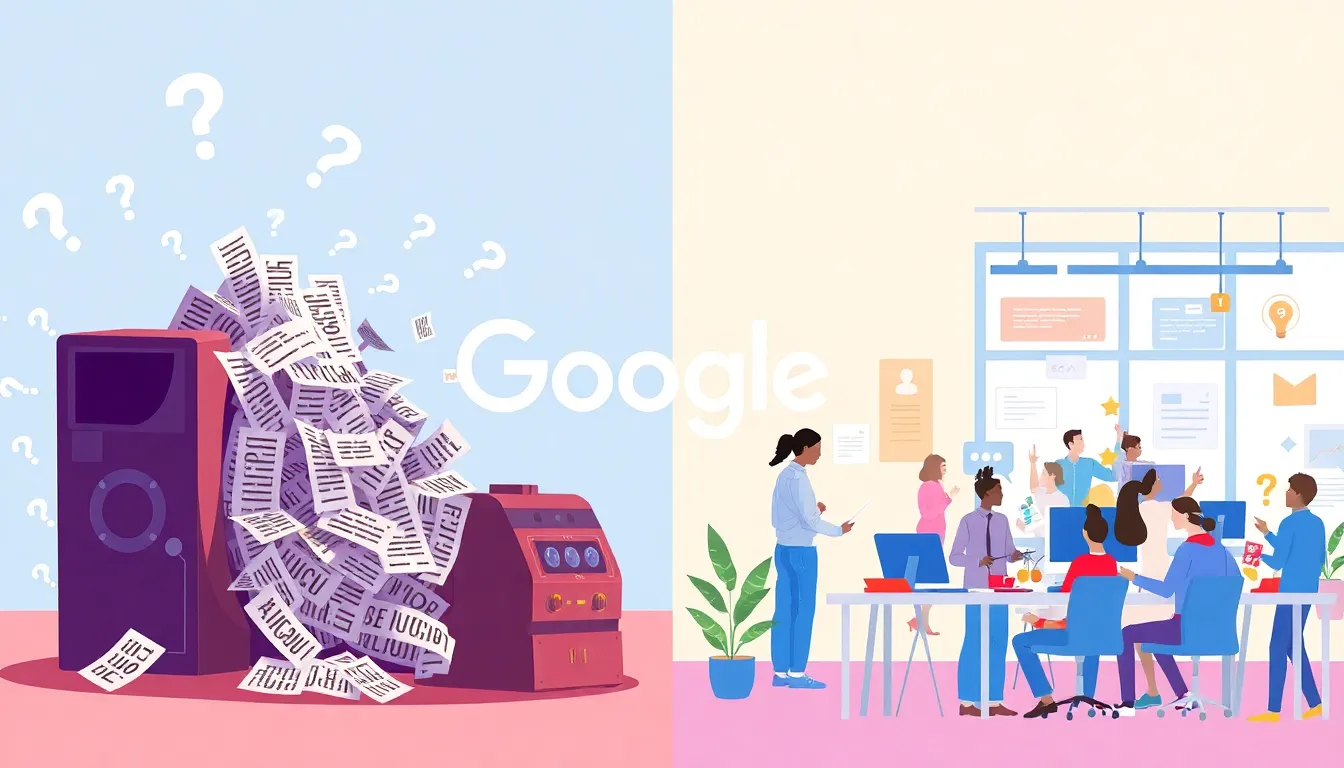
The Good Stuff: Why Everyone Is So Excited About AI in SEO
You can’t deny the appeal of using an AI tool for content creation. For a small business owner juggling a dozen tasks, it can seem like a lifesaver. There are some genuine benefits you can get if you use AI tools correctly and strategically.
Speed and Scale Like Never Before
Let’s be honest; creating content takes a significant amount of time. The process of brainstorming, outlining, writing, and editing can take hours, if not days, for a single article. This is a common pain point for anyone involved in SEO content marketing.
AI content tools can produce a first draft in minutes, which is a game-changer for scaling your efforts. This speed allows you to produce content at a volume previously unimaginable for small teams. You can finally start building out that blog you’ve been planning or target dozens of long-tail keywords to improve your SEO performance.
This rapid content generation also helps you overcome the dreaded fear of a blank page. Sometimes, just getting a few paragraphs down is all the momentum you need. AI can serve as that starting point, giving you a foundation to build upon and refine.

A Huge Help for Brainstorming
Ever stare at your screen trying to think of what to write about? We have all been there. AI is fantastic for breaking through this creative block and can function as a powerful brainstorming partner.
You can feed an AI tool a broad topic, and it can generate dozens of blog post titles, generate outlines, or suggest different angles to explore. It can even perform basic data analysis of popular questions related to your keywords. This drastically cuts down on the initial planning phase of creating content.
Think of it as a tireless creative assistant. You can ask for blog ideas for your plumbing business, then ask for a detailed outline for the best one. This makes the process of deciding what content to create far more efficient.

Cutting Down on Costs
Hiring expert writers is not cheap, and for good reason. It takes skill and experience to create quality content that connects with an audience and achieves high search rankings. For a startup or small business, this cost can be a significant barrier to entry for content marketing.
AI tools present a much more affordable alternative. While not free, a monthly subscription to an AI writer is a fraction of the cost of hiring a professional copywriter. For many businesses, this makes a consistent content seo strategy achievable for the first time.

The Big Risks: Where AI Content Can Go Horribly Wrong
Before you commit fully to using an AI writer for all your content needs, you must understand the serious downsides. I’ve seen some unfortunate outcomes when businesses rely too heavily on these tools.
The E-E-A-T Problem: Lacking Real Experience
Google places immense value on something it calls E-E-A-T. This stands for Experience, Expertise, Authoritativeness, and Trustworthiness. Following Google’s E-E-A-T guidelines is crucial for quality content, and this is where AI’s biggest weakness lies.
The “E” for Experience is a relatively new addition, and it’s a big one. Google wants to see content from people who have genuinely done the things they are writing about. An AI bot has never fixed a leaky tap, run a marketing campaign, or offered real-life examples from personal challenges.

Generative AI scrapes information from the internet and rephrases it; it doesn’t possess true understanding. It cannot provide a personal story or unique insights gained from years of hands-on work. This lack of experience can make your content feel hollow and cause it to fall short of user expectations.
Factual Errors and “Hallucinations”
This is a particularly frightening risk of AI content. AI models can confidently state things that are completely fabricated. These are known as “hallucinations,” where the AI generates incorrect information because it is simply predicting the next most likely word, not verifying facts.
Imagine your business website, a source of information for your customers, gives out incorrect medical or financial advice. That is a disaster for your brand’s trust and could have serious real-world consequences. You must fact-check every single claim an AI makes, which consumes valuable time and resources.
This risk is amplified when tools generate entire articles without oversight. If you create article after article without human review, you’re building a library of potentially inaccurate information. It’s a significant gamble with your reputation.
Soulless, Generic Content
Have you ever read a blog post and felt nothing? It was technically well-written, with correct grammar and sentence structure, but it had no personality. This is often what raw AI content feels like; it produces unoriginal content that lacks a human touch.
Your brand’s voice is a powerful asset that connects you to your audience and differentiates you from competitors. AI struggles to replicate this, often producing bland text that fails to build relationships or create loyal followers. You can’t build a community around content that isn’t engaging.
Furthermore, because many businesses are using the same AI tools, there’s a growing risk of content looking and sounding the same across multiple websites. This can lead to issues with duplicate content or content that simply fails to stand out. It’s great for speed, but terrible for brand identity.
The Big Question: So, Is AI-Generated Content Good For SEO?
The answer is yes, AI-generated content can be good for SEO, but with a major condition: it must be used as an assistant, not as a replacement for your writing team.
Think of AI as a very fast but very inexperienced junior writer. It can get the words down on the page, but it needs a skilled human editor to guide it, check its work, and add the critical human elements. This human-AI collaboration is where you find the best results.
Here is a simple way to look at the different approaches:
| Aspect | Human-Only | AI-Only | AI-Assisted (Human-led) |
|---|---|---|---|
| Speed | Slow | Very Fast | Fast |
| Cost | High | Low | Medium |
| Factual Accuracy | High | Low | High |
| Meets E-E-A-T | High | Very Low | High |
As you can see, the AI-assisted approach provides the best combination of speed, cost, and most importantly, quality. You can increase your content output without sacrificing the trust of your audience or falling foul of Google’s quality guidelines. This method mitigates the main SEO risks associated with purely AI-driven content.
How to Use AI Content the Smart Way
So, you’re ready to adopt the AI-assisted model. How do you do it effectively? Here is a simple process that keeps you in control and ensures the final product is high-quality, helpful content that you can be proud to publish.
- Start with human strategy. Do not ask the AI what you should write about. You know your customers and their pain points. Decide on a topic that will genuinely help them solve a problem, based on your own keyword research and expertise.
- Use AI to create an outline. Ask your AI tool to generate a blog post outline based on your chosen topic. This saves time and gives you a solid structure to work with. Be sure to tweak and refine this outline to fit your specific angle and include your key talking points.
- Generate a rough first draft. Now, you can let the AI write the first version of the article. Let it do the heavy lifting of filling in the sections you have outlined. Crucially, you must treat this as nothing more than a very rough draft.
- Fact-check like a detective. Go through every single sentence with a critical eye. If the AI mentions a statistic, find its original source. If it makes a claim, verify it from a reputable source. Treat everything as unproven until you can confirm it’s accurate.
- Inject your experience and unique insights. This is the most vital step in the process. Rewrite sections to include your own stories and real-life examples. Add insights that only you, as an expert in your field, could have. This is what turns generic content into great content.
- Edit for voice and personality. Read the entire article out loud. Does it sound like you or your brand? Or does it sound robotic and bland? Change words, restructure sentences, and polish the text until it reflects your unique personality and connects with your audience.
This process gives you the speed of AI while protecting you from its significant weaknesses. The result is a great article that satisfies search engines and your readers, and you get it done faster.
Conclusion
The debate over is AI-generated content good for SEO often misses the main point. It is not about human versus machine. The real contest has always been between helpful content and unhelpful content.
Low-effort, generic, or inaccurate content will fail, whether a person or an algorithm wrote it. Thoughtful, experience-driven content that genuinely helps the user will succeed. Google AI systems and their core updates are all designed to reward content that satisfies user intent.
You can absolutely use AI to support your AI SEO efforts. However, you cannot delegate your thinking, your experience, or your brand’s voice to it. Use AI as a tool to make your content creation process more efficient, but always remember that you are the expert your audience truly wants to hear from.