
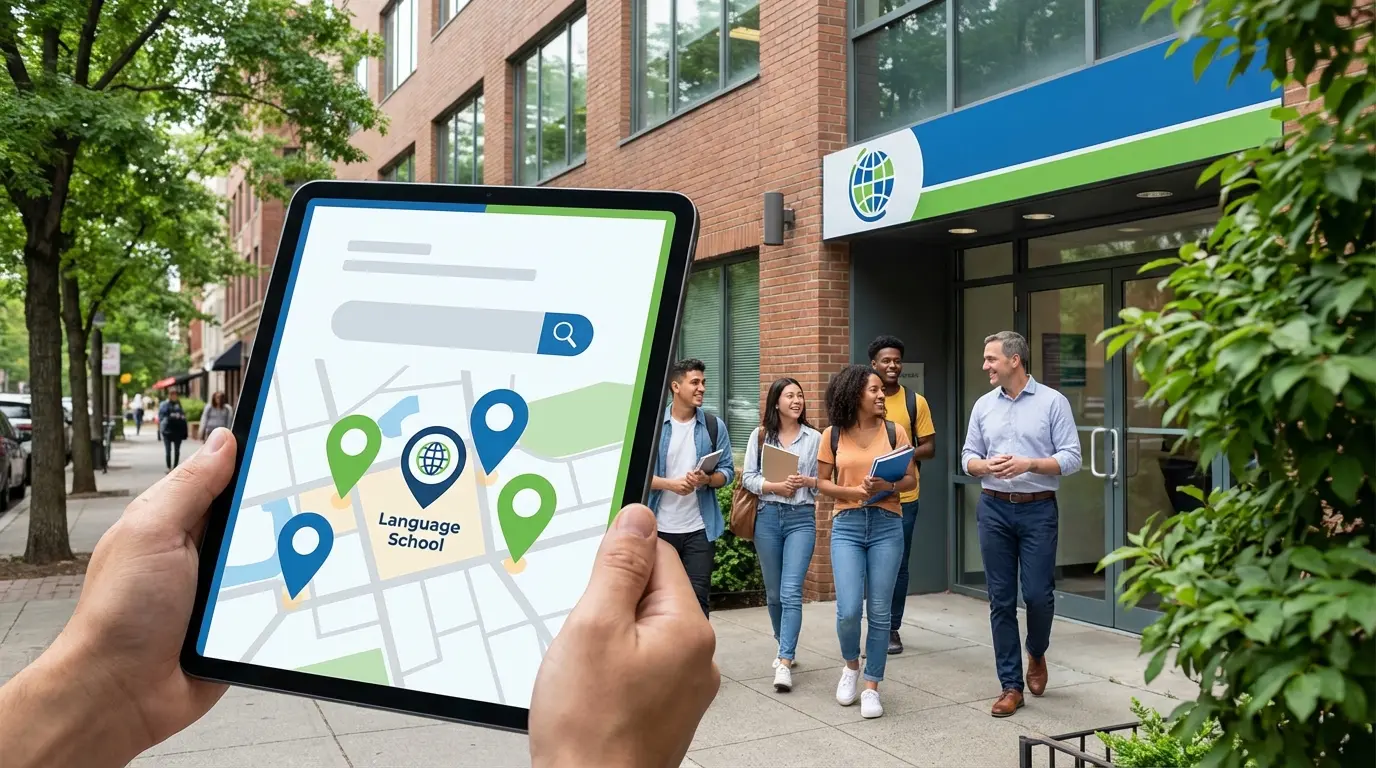
When international students search “English language school in Miami” or “Spanish classes near me,” does your school appear in the top results? Or are competitors capturing those high-intent searches while you remain invisible?
Right now, prospective students are actively looking for language programs in your city, typing your location into Google, comparing options, and making enrollment decisions. If you’re not ranking locally, you’re losing students to schools that might not even offer better programs than yours.
Here’s the reality: local SEO for language schools is the difference between full classes and empty seats. Unlike general search engine optimization, where you compete against massive platforms, local SEO lets you dominate your specific city and neighborhood.
When someone searches for educational institutions in your area, strong local SEO for language schools ensures your name appears first, your Google Business profile shows up with reviews and photos, and your website ranks above competitors just blocks away.
In this guide, we’ll show you the essential local SEO tactics every language school needs, how to optimize your Google Business Profile for maximum visibility, the local keywords that actually drive enrollments, and how to build local authority that keeps you ranking above competitors.
Why Local Search Matters for Student Enrollments
Students rarely cross state lines to attend a weekly evening French class at a local institute. They look for convenient schools offering multiple languages within a 20-minute drive from their home or workplace. This geographic limitation makes local search optimization the most profitable marketing channel for brick-and-mortar language institutes.
Traditional advertising methods like flyers or local radio spots waste money on people who have zero interest in learning foreign languages. Search engines connect you directly with users who actively want to spend money on education right now. Are you capturing this high-intent traffic in your city through smart language school marketing?
Data shows that nearly half of all Google searches carry specific local intent for nearby services. When someone in Adelaide searches for “ESL courses,” Google automatically filters the results to show Adelaide-based schools. You must signal to search engines exactly where you operate and what languages you teach.
- Local search targets high-intent students actively looking to spend money on language education.
- Geographic proximity acts as the primary deciding factor for students choosing a brick-and-mortar language learning center.
- Nearly 50% of all online searches carry specific local intent that you can capture.
Optimize Your Google Business Profile to Improve Local Search Rankings and Visibility
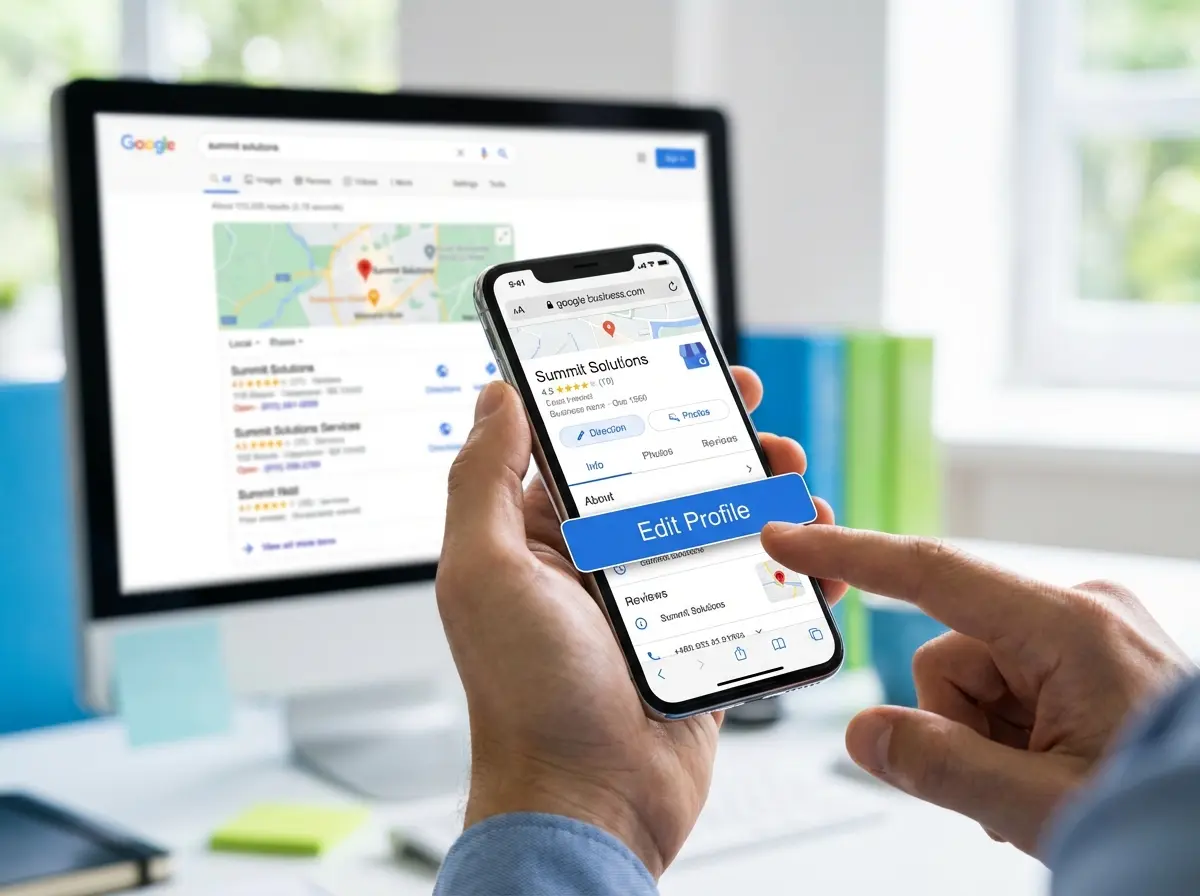
Your Google Business Profile acts as your primary digital storefront in local search results for students. This free listing dictates whether your school appears in the highly coveted map pack at the top. An incomplete profile pushes you down the local search rankings and costs you valuable student leads.
Many school owners claim their listing and immediately forget about it during their daily operations. You need to actively manage this asset to outrank other language centers in your metropolitan area.
Let us walk through the exact steps to maximize your profile visibility and attract more local clicks.
How to Set Up Your Local Profile for Successful Language School Marketing
Claim and Verify Your Listing
Provide your exact business name, physical address, and local phone number. Request the verification postcard from Google to prove you operate at that specific location.
Select the Correct Categories
Choose “Language School” as your primary category to accurately describe your business. Add secondary categories like “Educational Institution” or “Adult Education School” if they apply to your programs.
Upload High-Quality Photos
Add bright pictures of your classrooms, instructors teaching, and the exterior of your building. Visuals help prospective students feel comfortable before they ever set foot inside.
Keep your operating hours perfectly accurate, especially around federal holidays or scheduled school breaks. Nothing frustrates a prospective student more than arriving at a closed office after Google said you were open. Consistency builds trust with both search algorithms and human users browsing the map.
Build a Hyper-Local Website Architecture for Effective Language School Marketing
A strong Google listing needs a powerful, locally optimized website to back it up. Search engines crawl your website to verify the information presented in your business profile. If your site lacks clear geographic signals, your local rankings will inevitably suffer a significant drop.
Start by embedding a responsive Google Map directly on your primary contact page. List your complete physical address, local phone number, and detailed parking or public transit instructions. If you operate multiple campuses in different cities, create a dedicated location page for each specific branch.
Implement LocalBusiness schema markup in your website code. This structured data explicitly tells search engines your exact coordinates, operating hours, and accepted payment methods.
We also recommend mentioning local landmarks or recognized neighborhoods in your page copy. If your English language center sits near Millennium Park in Chicago, mention that specific detail on your homepage. These micro-local signals help search engines connect your business to the surrounding community and improve relevance.
Manage Online Reviews and Local Citations to Boost Local SEO
Prospective students rely heavily on online reviews to evaluate the quality of your language programs. A steady stream of positive feedback signals authority to search engines and confidence to future learners. You need a proactive system for generating and managing these public testimonials from your alumni.
Ask your happiest students to leave a review after they pass a major language proficiency exam. Send them a direct link to your Google Business Profile via email or text message. Always respond professionally to every single review you receive, even the occasional negative ones.
Never offer cash discounts or free lessons in exchange for Google reviews. This violates platform guidelines and can result in the permanent suspension of your business profile.
Beyond reviews, you must build consistent local citations across the wider internet. Citations are mentions of your business name, address, and phone number on directories like Yelp or Yellow Pages. Search engines cross-reference these directories to validate your physical existence and establish your local authority.
Create Highly Localized Blog Content
Most language schools publish generic blog posts about basic grammar rules or vocabulary lists. While helpful, these broad topics compete against massive international websites and rarely attract local foot traffic. You generate far better results by writing content specifically for your immediate local community.
Write a comprehensive guide about the best places to practice speaking Italian in your specific city. Highlight local cultural festivals, authentic restaurants, or community meetup groups relevant to the languages you teach. This hyper-local content proves your community involvement and ranks easily for regional search terms.
You can also publish success stories featuring students from your local area. Interview a local business owner who learned Mandarin at your school to expand their company overseas. How often do you feature real, local success stories on your website to build immediate trust?
- Hyper-local blog posts face less competition and attract highly relevant local traffic.
- Featuring local student success stories builds immediate trust with readers in your city.
- Consistent citations across Yelp and other directories validate your business location.
Optimize for Mobile and Voice Search
The majority of local searches now happen on mobile devices while people are on the go. If your website takes too long to load on a smartphone, prospective students will bounce to a competitor. A fast, mobile-friendly website serves as a foundational requirement for modern search engine visibility.
Voice search also plays a massive role in how students find local educational facilities today. People speak into their phones differently than they type on a traditional keyboard. They ask complete questions like, “Where is the best Japanese language school near me?”
To capture this voice traffic, include natural phrasing and conversational questions in your website content. Create an extensive frequently asked questions page that addresses common inquiries about your class schedules and pricing. Answering these specific questions clearly helps you dominate local search results in your geographic area.
Track and Measure Your Local Search Rankings
You cannot improve your local search visibility if you do not track your baseline performance. Monitoring your local search rankings helps you understand which marketing strategies actually drive student enrollments. You need reliable data to make informed decisions about your future advertising budgets and content creation.
Use specialized ranking tools to track how your website performs for specific keywords in your exact zip code. Monitor your Google Business Profile insights to see how many people ask for driving directions or call your office. These metrics reveal the direct impact of your optimization efforts on real-world student interactions.
Pay close attention to the specific search terms that generate the highest conversion rates. You might discover that “weekend French immersion” brings in more paying students than generic “French classes” searches. Adjust your website copy and content strategy to target these highly profitable, localized keyword variations.
Fill Your Classrooms Using Local SEO for Language Schools
Local search visibility dictates the financial success of modern language schools across the country. Students actively search for convenient, highly-rated educational facilities in their immediate neighborhoods every single day. By implementing these local SEO for language schools strategies, you position your institution directly in front of eager learners.
Start by claiming your Google Business profile and standardizing your contact information across the web. Build a website that clearly communicates your physical location and actively gather reviews from your best students. These foundational steps create a reliable pipeline of new student enrollments for your language programs.
Stop losing valuable students to less qualified competitors who simply have better digital marketing. Take control of your local search presence today and watch your class rosters grow month after month. The investment in local visibility pays reliable dividends for your educational business for years to come.