
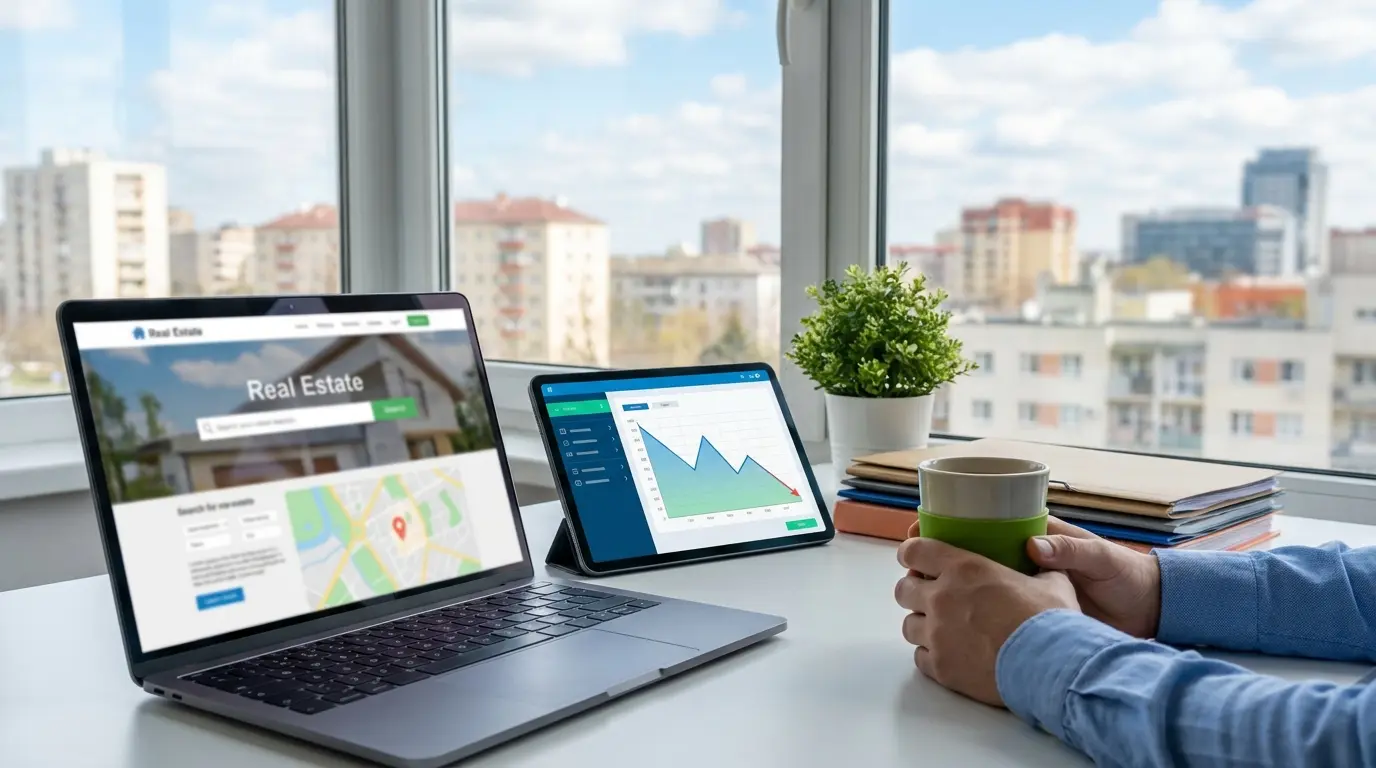
If you wonder why isn't my real estate website ranking on Google, it likely lacks original hyper-local content or suffers from poor technical performance. Search engines prioritize sites offering distinct neighborhood insights, fast loading speeds, and authoritative local backlinks. Fixing these foundational issues through a better local SEO approach will help you compete against major portals and attract local buyers.
Many real estate professionals struggle to gain visibility in search engine results. You might publish new listings daily and maintain active social media profiles, yet your organic traffic remains stagnant. This happens because search algorithms require specific trust signals and content structures that many property sites ignore. We will examine the primary reasons your pages fail to appear on the first page of Google.
Real Estate SEO Strategy: Why You Rely Too Heavily on Duplicate IDX Feeds
Internet Data Exchange (IDX) integration allows you to display multiple listing service data directly on your site. While this feature helps buyers find homes, it creates massive duplicate content issues for search engines. Thousands of other brokerages display the exact same property descriptions and images, which weakens your on-page SEO. Google filters out this duplicate information, leaving your site with very little original material to index.
Add original commentary and unique meta descriptions to your featured property listings. A few paragraphs about why a specific home stands out can differentiate your page from standard MLS syndication.
Local Search Visibility: Why Your Content Lacks Hyper-Local Depth
Broad keywords like "homes for sale in Texas" are completely dominated by national portals like Zillow and Realtor.com. Local brokerages cannot compete on these high-volume, generic search terms due to a massive gap in domain authority. Buyers frequently search for specific subdivisions, school districts, or condominium buildings. If your website lacks dedicated pages for these micro-markets, you lose valuable organic traffic.
National platforms aggregate massive amounts of data, but they lack genuine community context. A portal cannot tell a buyer which coffee shop locals prefer or how the neighborhood traffic flows during morning commutes. By injecting your personal experience into your neighborhood insights and community pages, you provide value that algorithms recognize. This specific local knowledge separates top-performing agent websites from generic property search portals.
Technical SEO and Site Speed: Why Technical Performance and Mobile Experience Suffer
Real estate websites often feature large, uncompressed image galleries and heavy virtual tour scripts. These elements significantly slow down your page loading times and degrade the user experience. Google uses Core Web Vitals as a ranking factor, heavily penalizing slow and unresponsive pages. Furthermore, if your site is not mobile-friendly, search algorithms will demote your rankings immediately.
Mobile usability represents a critical factor for property searches. According to industry data, the vast majority of home buyers use mobile devices to search for properties while driving through neighborhoods. If your buttons are too small to tap or your interactive maps fail to load on a smartphone, visitors will leave immediately. Search engines track these abandonment rates and adjust your search engine results accordingly.
Domain Authority and Keyword Research: How Keyword Cannibalization Dilutes Your Authority
Many agents accidentally create multiple pages targeting the exact same search terms. You might have a blog post, a neighborhood guide, and a property category page all optimized for "Miami luxury condos." Search engines become confused about which page provides the best answer for the user. Checking your Google Search Console can reveal if this confusion causes all your competing pages to rank lower than they should.
- IDX feeds create duplicate content that search engines actively filter out of search results.
- National portals dominate broad keywords, requiring you to target hyper-local neighborhood terms.
- Slow loading speeds from large property images actively harm your search rankings.
Search Engine Results: How Do Search Engines Evaluate Real Estate Sites?

Google applies strict quality standards to websites that deal with significant financial decisions. Real estate falls under the "Your Money or Your Life" (YMYL) category within search guidelines. This classification means search algorithms scrutinize your site for Experience, Expertise, Authoritativeness, and Trustworthiness. You must demonstrate clear professional credentials and local market authority to earn high rankings.
Local Search Visibility: The Importance of Local Search Signals
Search engines want to recommend legitimate local businesses to their users. They look for consistent name, address, and phone number information across the internet. An active and verified Google Business Profile serves as a critical trust signal for local search visibility. Without these foundational local signals, algorithms struggle to verify your physical presence in the market.
Your physical office location plays a major role in how you appear for "near me" searches. Search engines cross-reference your business information across various directories to confirm your legitimacy. Inconsistencies in your office address or phone number create confusion for search crawlers. Maintaining accurate citations across platforms like Yelp, Bing Places, and local chamber of commerce directories strengthens your local search presence.
Domain Authority and Backlink Profile: Backlinks from Relevant Industry Sources
Links from other reputable websites act as digital votes of confidence for your domain. Many real estate agents launch websites but never build relationships that result in a strong backlink profile. A lack of links from local news outlets, community organizations, or industry associations keeps your domain authority low. You need a proactive strategy to earn mentions from established local entities.
Consider sponsoring local youth sports teams or hosting community charity events. These activities often generate natural links from community websites and local news publications. You can also offer expert quotes about the housing market to local journalists. When these publications cite your expertise and link back to your homepage, your search visibility improves dramatically.
Do not purchase backlinks from low-quality link farms. Google actively penalizes websites that attempt to manipulate search rankings through artificial link-building schemes.
Organic Traffic: User Engagement and Behavioral Metrics
Search algorithms monitor how visitors interact with your website after clicking a search result. If users immediately leave your site because the navigation is confusing, this high bounce rate signals a poor user experience. Conversely, visitors who spend several minutes reading your neighborhood guides send positive engagement signals. High-quality content keeps users on your pages longer, which indirectly supports better search rankings.
Why Isn't My Real Estate Website Ranking on Google? How to Fix Your Real Estate SEO Strategy
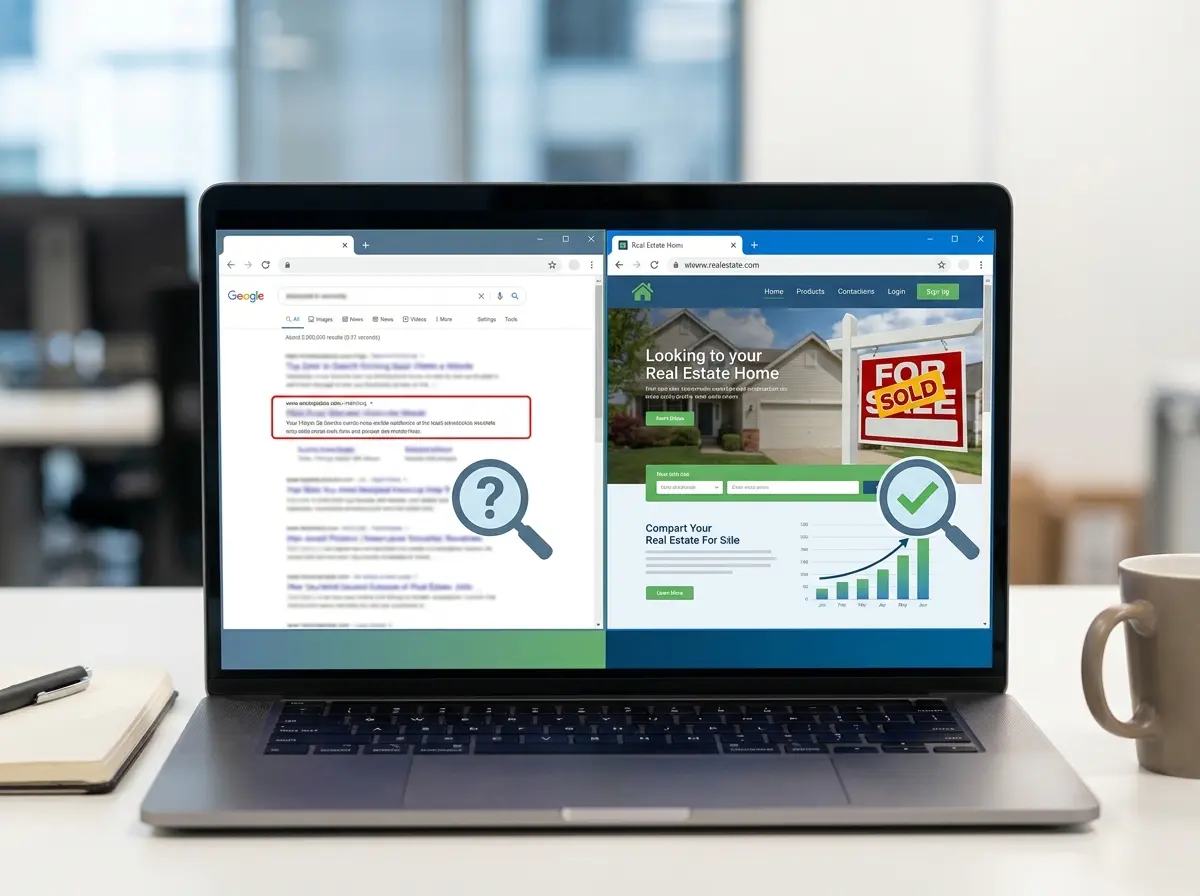
Fixing a poorly performing website requires a methodical approach to technical improvements and content creation. You must shift your focus from broad market terms to highly specific local information. The following steps will help you rebuild your search visibility foundation.
Execution Steps for Better Rankings
Audit Your Technical SEO Foundation for Better Search Engine Results
Run your website through Google PageSpeed Insights to identify speed bottlenecks. Compress all property images and defer the loading of heavy scripts until necessary.
Build Hyper-Local Neighborhood Pages to Increase Organic Traffic
Create comprehensive guides for specific communities within your target market. Include original insights about local amenities, school boundaries, and recent market trends.
Optimize Your Google Business Profile for Local Search Visibility
Claim your local listing and fill out every available field with accurate information. Encourage satisfied clients to leave detailed reviews about their home buying experience.
Frequently Asked Questions
Property professionals often have specific concerns about their digital marketing performance. Here are direct answers to common questions about real estate search visibility.
How long does it take for a real estate website to rank?
A new real estate website typically takes six to twelve months to achieve meaningful search rankings. This timeline depends heavily on your market competitiveness and the quality of your content. Consistent publication of original local insights can accelerate this process significantly. Search engines need time to crawl your pages and verify your local authority.
Do I need a blog for my real estate website?
A blog provides an excellent platform to answer specific buyer and seller questions. Publishing regular market updates and buying guides builds topical authority for your domain. This educational content attracts potential clients early in their research phase. Agents who consistently publish helpful articles capture more organic traffic than those who rely solely on property listings.
Why is Zillow outranking my local agency website?
Zillow possesses massive domain authority and millions of backlinks, making them impossible to beat on broad keywords. They invest heavily in technical infrastructure and comprehensive data organization. You can only outrank them by targeting highly specific, hyper-local queries that they cannot cover in detail. Focus your efforts on micro-neighborhoods and personal community insights.
Should I hide my IDX search behind a registration wall?
Forcing users to register before viewing properties can generate leads, but it harms your search engine optimization. Search engine crawlers cannot fill out forms or bypass registration walls. If you block access to your listings, search algorithms cannot index those pages. Keep your primary content open to the public while offering optional premium resources for registered users.
- Real estate websites must satisfy strict quality standards due to their financial nature.
- Building local backlinks increases your digital authority and search visibility.
- Consistent technical audits prevent large media files from slowing down your site.
Conclusion and Next Steps
Earning visibility in search engine results requires a deliberate and sustained strategy. Your real estate website will not rank if it simply mirrors the MLS data found on thousands of other domains. You must establish yourself as a genuine local authority by publishing original neighborhood insights and maintaining excellent technical performance.
Start by auditing your current website for speed and mobile usability. Identify three specific neighborhoods in your market and write comprehensive, original guides for each area. If your traffic remains stagnant despite improving your internal workflows, an experienced digital marketing partner can help identify specific bottlenecks and accelerate your local search visibility.